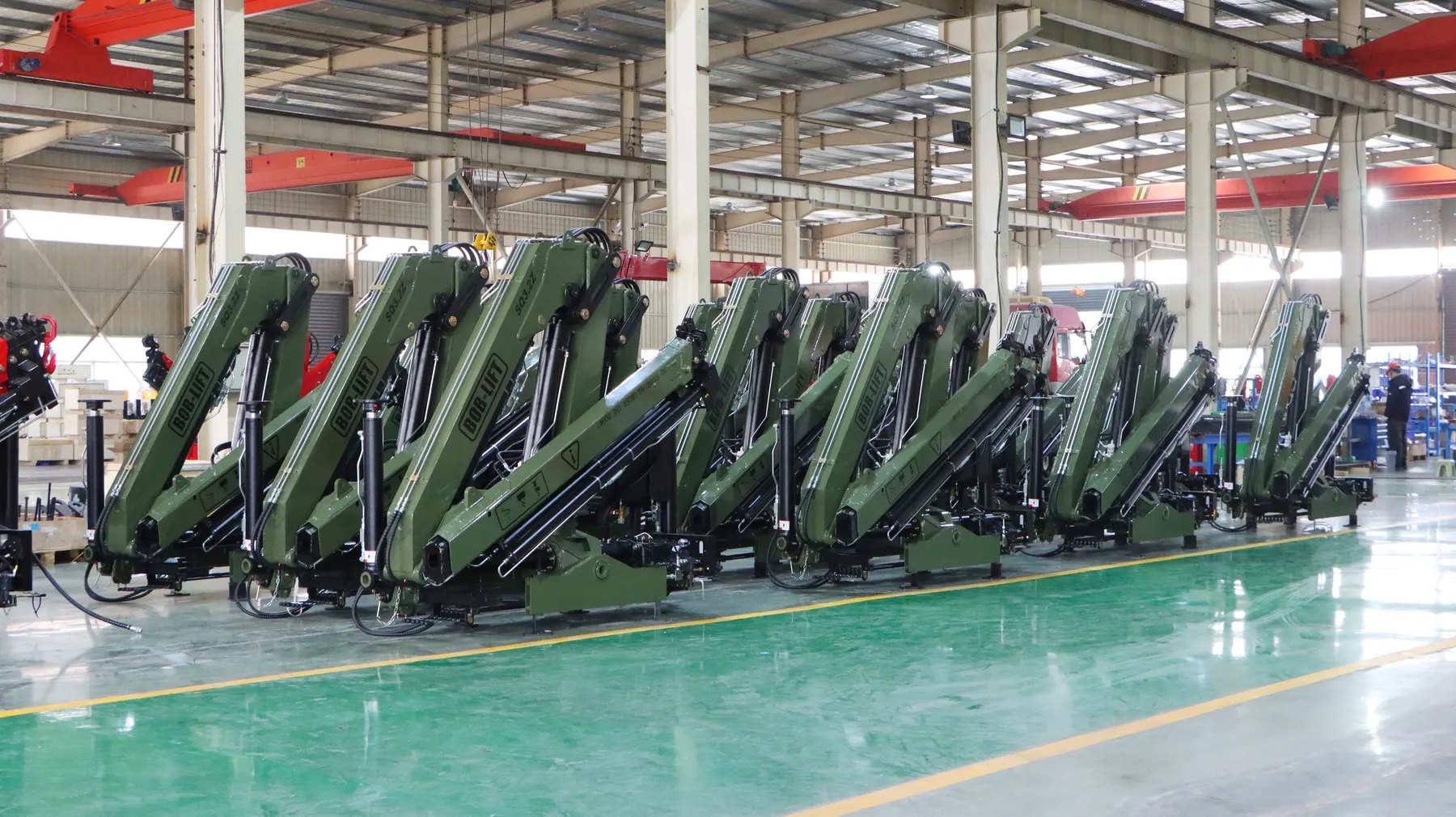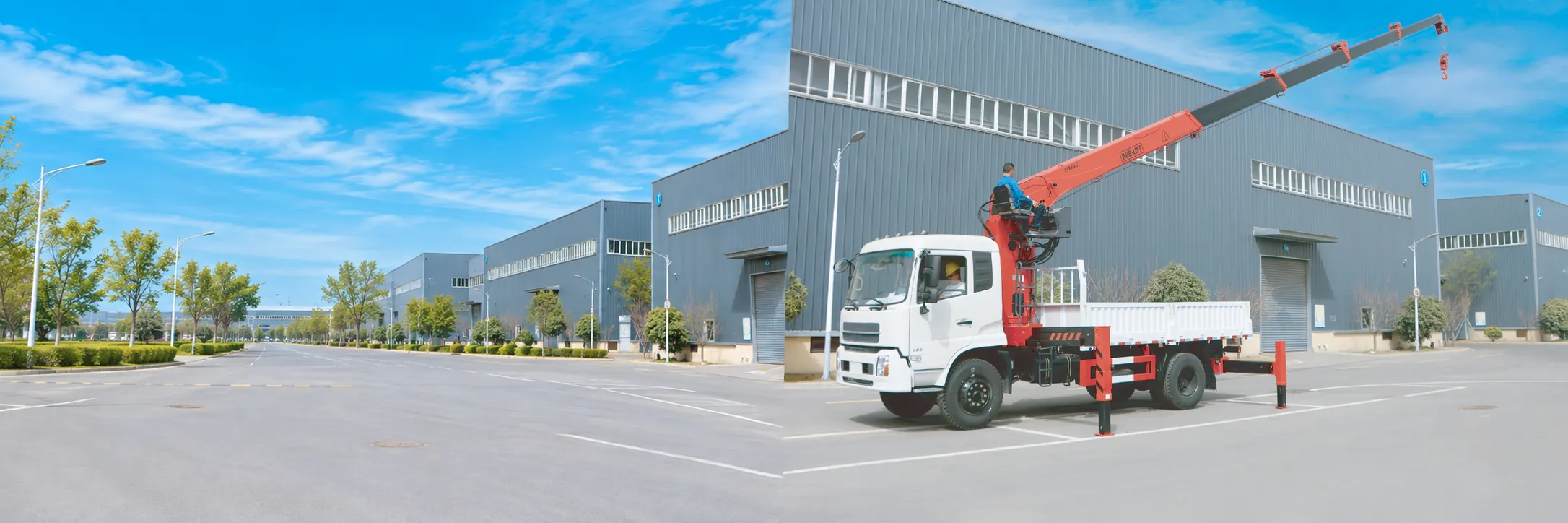

A truck tail lift is a hydraulic platform fitted to the rear of a truck that raises goods from the ground to the load bed and lowers them again. In North America it is usually called a liftgate or a hydraulic lift gate. BOB-LIFT makes 11 tail lift models rated from 500 kg to 2,000 kg, for load beds from 600 mm to 1,650 mm above the ground, with a steel or an aluminium platform.
We have built truck mounted cranes in Xuzhou since 2003 and export our equipment to 124 countries and regions. This guide uses our tail lift specification sheet to explain how to choose the right model: which load to count, how to measure your truck, which platform type suits your body, and what the lift needs from the truck’s electrical system.
Key takeaways
- Two figures choose the model: the heaviest load on the platform and the height of the load bed above the ground.
- Count the goods, the pallet truck and the operator together, because all three ride on the platform.
- Measure the distance from the rear leaf spring to the rear of the body. Our models need 580 mm to 1,130 mm.
- A steel tail lift weighs 400 kg to 500 kg, and the aluminium version is 50 kg lighter in every size.
- The lift runs on the truck battery: 12 V for 500 kg models, 12 V or 24 V for 1,000 kg and 1,500 kg, and 24 V for 2,000 kg.
What is a truck tail lift?
A tail lift is a lifting platform permanently mounted beneath the rear of a truck body. A compact power unit, containing an electric motor, a gear pump and a valve block, delivers hydraulic oil to the cylinders that raise, lower and tilt the platform. Because the motor draws its electricity from the truck’s own battery, the lift operates wherever the vehicle can park, independently of loading docks, forklifts or additional personnel.
Tail lifts are common on delivery trucks that carry pallets, roll cages, appliances, drinks or building materials to sites without a dock. For example, a single driver can roll a loaded pallet truck onto the platform at ground level, raise it to the load bed and push it straight into the body. Each BOB-LIFT tail lift is supplied with the power unit, the hydraulic cylinders, the lifting frame, a control box on the body and a hand-held control.

Cantilever, folding or built-in: which type suits your truck?
Tail lifts come in three main types, and the body of your truck usually decides which one fits. The cantilever type has the largest load capacity and suits box trucks and open-top trucks; when raised, its platform closes the rear of the body like a door. The folding type suits flatbed trucks and pickups, because the platform folds and tucks in behind the rear of the vehicle when it is not in use. The built-in type stows under the body, out of sight, which keeps the rear of the truck clear and makes the annual vehicle inspection simpler.
| Type | Best for | Where the platform goes when stowed |
|---|---|---|
| Cantilever | Box trucks, open-top trucks, heavier loads | Upright, closing the rear of the body |
| Folding | Flatbed trucks and pickups | Folded in behind the rear of the vehicle |
| Built-in | Trucks that must keep the rear clear | Under the body, out of sight |
How much load should a tail lift carry?
The rated load must cover everything on the platform at the same time: the goods, the pallet truck or trolley, and the operator who rides with them. A pallet of drinks weighing 800 kg, a manual pallet truck of about 70 kg and an operator of about 90 kg already add up to roughly 960 kg, which is too close to a 1,000 kg rating for comfort, so a 1,500 kg model is the safer choice in that situation. The first number in our model code is the rated load in hundreds of kilograms, so a BL-05 lifts 500 kg, a BL-10 lifts 1,000 kg, a BL-15 lifts 1,500 kg and a BL-20 lifts 2,000 kg.
Load position is equally important. A load positioned near the outer edge of the platform places considerably more strain on the lifting arms and cylinders than the identical load positioned close to the body, so always place heavy goods as near to the vehicle as practical and follow the load distribution diagram supplied with the lift.
Measure the bed height and the rear overhang
Once the load is known, two measurements on your vehicle determine the appropriate model. The first is the height of the load bed above the ground, measured with the truck loaded as it normally operates; the second is the distance between the rear leaf spring and the rear end of the body, because the lifting frame is installed within that space. The following table lists these figures for all 11 models.
| Model | Rated load | Load-bed height | Rear spring to body end |
|---|---|---|---|
| BL-05-085 | 500 kg | 600–820 mm | ≥580 mm |
| BL-05-095 | 500 kg | 750–850 mm | ≥630 mm |
| BL-05-130 | 500 kg | 950–1,100 mm | ≥750 mm |
| BL-10-105 | 1,000 kg | 750–850 mm | ≥650 mm |
| BL-10-130 | 1,000 kg | 850–950 mm | ≥750 mm |
| BL-15-110 | 1,500 kg | 950–1,100 mm | ≥730 mm |
| BL-15-130 | 1,500 kg | 900–1,250 mm | ≥800 mm |
| BL-15-150 | 1,500 kg | 1,200–1,450 mm | ≥930 mm |
| BL-20-130 | 2,000 kg | 900–1,250 mm | ≥800 mm |
| BL-20-150 | 2,000 kg | 1,200–1,450 mm | ≥930 mm |
| BL-20-165 | 2,000 kg | 1,500–1,650 mm | ≥1,130 mm |
Platforms measure 1,600 mm to 1,800 mm in depth, and their width ranges from 1,800 mm to 2,100 mm on the 500 kg models and from 1,800 mm to 2,500 mm on the larger models, so the platform can usually match the width of the existing body. Full details are on our truck tail lift product page.
Steel or aluminium platform?
A steel plate platform is the stronger choice for heavy, daily loading, since it resists bending and holds its finish. An aluminium platform is lighter, which leaves more of the truck’s payload for goods. A steel tail lift weighs 400 kg on the 500 kg and 1,000 kg models, 450 kg on the 1,500 kg models and 500 kg on the 2,000 kg models, and the aluminium version saves 50 kg in every size. On a light truck that often runs close to its weight limit, those 50 kg can matter; on a heavy truck carrying building materials every day, steel is usually the better investment.

Battery voltage and power
A tail lift operates on the truck’s battery, which means the lift’s voltage must correspond to the vehicle’s electrical system. Our 500 kg models operate on 12 V with a 1.2 kW pump motor. The 1,000 kg models use 12 V or 24 V with a 2.0, 2.2 or 2.4 kW motor, the 1,500 kg models use 12 V or 24 V, and the 2,000 kg models use 24 V, both with a 2.2, 2.4 or 2.8 kW motor. The hydraulic system works at 16 to 18 MPa. Light trucks and pickups typically have a 12 V electrical system, whereas many heavy commercial vehicles use 24 V, so verify your chassis specification before ordering.
Because every lifting cycle draws current from the battery, a vehicle that makes numerous deliveries each day requires a battery and charging system in excellent condition, and your body builder can advise whether a larger battery or heavier cabling would be worthwhile for your particular duty cycle.
See a BOB-LIFT tail lift in our factory
This 30-second factory video shows real BOB-LIFT tail lifts on display bodies in our workshop, with the platform raised, tilted and stowed.
Safe use and regular inspection
A tail lift is lifting equipment, and many countries require it to be examined regularly. In the United Kingdom, for example, the Health and Safety Executive’s guidance on thorough examination of lifting equipment says that, unless an examination scheme sets other intervals, equipment should be examined every 6 months if it is used to lift people and every 12 months for other lifting equipment. Since the operator often rides the platform with the goods, plan for the shorter interval and check the rules in your own country.
Daily operating habits are equally important: park on level, firm ground, keep the area beneath the platform clear, remain within the rated load, and keep goods away from the platform edge. If the platform moves unevenly, gradually drifts downward or leaks hydraulic oil, discontinue using it until a qualified technician has inspected it.
How to choose a tail lift in five steps
- Add up the heaviest load: goods, pallet truck and operator together.
- Measure the load-bed height with the truck loaded as it normally runs.
- Measure the distance from the rear leaf spring to the rear end of the body.
- Choose the type that suits your body: cantilever, folding or built-in.
- Check the truck’s battery voltage, then send us the chassis model and these figures so we can match the model, platform size and material.
Frequently asked questions
Is a tail lift the same as a liftgate?
Yes. Tail lift is the usual term in the United Kingdom and many export markets, while liftgate or hydraulic lift gate is common in North America; both describe a hydraulic platform at the rear of a truck.
How much can a truck tail lift lift?
BOB-LIFT tail lifts are rated from 500 kg on the BL-05 models to 2,000 kg on the BL-20 models, and the rating must cover the goods, the pallet truck and the operator together.
How heavy is a tail lift?
A steel BOB-LIFT tail lift weighs 400 kg to 500 kg depending on its rating, and the aluminium version is 50 kg lighter in every size, which leaves more payload for goods.
Can a tail lift be fitted to a pickup or a flatbed?
Yes. The folding type suits flatbed trucks and pickups, because its platform folds in behind the rear of the vehicle; send us the chassis model and bed height to confirm the fit.
Do you supply the truck as well?
No. We supply the tail lift only, with its power unit, cylinders, frame and controls, and a local body builder fits it to your truck with our technical support.
How we compiled this guide
All tail lift figures come from the BOB-LIFT tail lift specification sheet for the BL-05 to BL-20 models, as published on our product page in November 2026. The load example is our own illustration. The inspection intervals are quoted from the UK Health and Safety Executive page linked above. The photos and the video show real BOB-LIFT tail lifts in our Xuzhou workshop. The guide was reviewed by Achord Chan, Product Operations Director, in November 2026. It does not replace the lift’s manual, your body builder’s instructions or the law where you work.
Get the right tail lift for your truck
Send us the chassis model, the body type, the load-bed height, the distance from the rear spring to the rear of the body and the truck’s voltage, and we will match the model, platform size and material. If you also need to lift heavier goods onto the truck from a distance, a small knuckle boom crane may suit you better. Browse our tail lift range, or contact us for a quotation.