
An outrigger pad is a flat plate of timber, steel, aluminium or engineered plastic placed under one outrigger foot to spread its force over more ground. A crane mat is a larger, heavier mat, usually timber, steel or composite, laid under the pads, the tracks or the whole crane when the ground is too weak for pads alone. Every outrigger needs a pad, and crane mats come in when the area a pad would need becomes too big to handle or the ground is soft, wet or made-up fill. When even mats are not enough, a temporary works engineer designs a platform. The choice follows one calculation: the maximum outrigger force divided by the pressure the ground can safely carry.
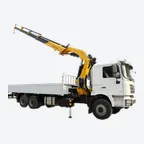
We have built truck mounted cranes in Xuzhou since 2003, and buyers often ask us which pads to carry and when they will need crane mats. BOB-LIFT supplies the crane; pads and mats are supplied separately. This guide explains the terms, compares timber, steel and composite crane mats, shows how to choose the size from the outrigger force, and sets out how to place, inspect and carry them.
Key takeaways
- An outrigger pad sits under one outrigger foot. A crane mat is larger and spreads the force further on weak ground, often under the pads.
- Use a pad under every foot, whatever the ground. Add crane mats when the ground is soft, wet or filled, or when the pad you would need is too big to handle.
- Size comes from one division: maximum outrigger force ÷ allowable ground pressure = bearing area needed. A pad or mat only delivers that area if it is stiff enough.
- US rules treat mats, blocking and cribbing as “supporting materials” and require firm, drained and graded ground. Australian guidance says pads and mats should be of materials and dimensions specified by the crane manufacturer, or by a competent person.
- Inspect pads and mats before use and retire any that are cracked, split, rotten, delaminated or permanently bent. BOB-LIFT cranes ship without pads or mats; these are supplied separately.
What is the difference between an outrigger pad and a crane mat?
The difference is size and job. A pad serves one foot, while a crane mat, also called a timber mat, bog mat or swamp mat, covers a much larger area and can carry pads, tracks or vehicles. The US crane rule groups them together. 29 CFR 1926.1402(a)(2) defines “Supporting materials” as “blocking, mats, cribbing, marsh buggies (in marshes/wetlands), or similar supporting materials or devices”. OSHA’s 2008 proposal for the rule explained why: “Such materials typically help to distribute the load of the crane over a broad area and/or assist in leveling the equipment” [1].
| Term | What it is | Typical use on a truck mounted crane |
|---|---|---|
| Outrigger float (foot plate) | The plate fixed to the bottom of the outrigger jack | Part of the crane; it must stay attached to the outrigger |
| Outrigger pad | A loose plate under one float | Every set-up, carried on the truck |
| Blocking or cribbing | Timber or other material stacked to support a load | Under a float to level it or raise the bearing surface |
| Crane mat | A large timber, steel or composite mat | Under the pads on weak or uncertain ground |
| Access mat (logging mat) | A mat laid as a temporary road or working surface | Getting the truck to the set-up position on soft ground |
Blocking, in the words of 29 CFR 1926.1401, is “wood or other material used to support equipment or a component and distribute loads to the ground”. It is typically used “under outrigger and stabilizer floats”. Under 29 CFR 1926.1404(q)(3), “When outrigger floats are used, they must be attached to the outriggers”. A loose pad goes under the float, never in place of it.
When do you need outrigger pads, and when crane mats?
You always need pads, and you need crane mats when pads alone cannot keep the pressure below what the ground can carry. Safe Work Australia’s Guide to Mobile Cranes starts from the pad. It says: “Irrespective of the ground conditions, timbers or other means of distributing the load should be placed under the outriggers”. The only exception is where engineering indicates a direct pad application. The same guide says “Plastic or timber bog mats are sometimes used under mobile cranes where the ground bearing capacity is low”.
Regulators keep seeing what happens when pads are too small. A 2026 alert from WorkSafe Queensland lists “Timbers or other support pads under outrigger feet being too small for the ground type and condition” among the causes of mobile plant tipping. It also notes that some suppliers of large slewing cranes send bog mats on a separate truck as standard practice, under the rule “no bog mats, no crane”. In practice, these signs point toward crane mats:
- Soft clay, silt, loose sand, saturated ground or a high water table.
- Made ground, fill or backfilled trenches whose compaction nobody can confirm.
- A pad that would need to be wider than one person can safely handle and position.
- Heavy lifts at long radius, where one outrigger carries most of the combined weight of crane, truck and load.
- Ground that must also be protected, such as lawns, sports fields or sealed surfaces.

Which material is best for crane mats and outrigger pads?
Timber is still the default, and Safe Work Australia’s guide confirms that “Lengths of timber with rectangular cross sections” are “the most common form of outrigger pad”, adding that “plastic and metal pads are also provided for some cranes”. Each material trades weight, stiffness and durability differently. The table sets out these trade-offs as general practice, not as ratings. A pad or mat’s capacity always comes from its maker.
| Material | Strengths | Limits | Check before use |
|---|---|---|---|
| Hardwood timber (solid, laminated or bolted) | Easy to cut to size, grips well, tolerates uneven ground | Heavy, especially when wet; can rot, split and absorb oil | Splits, rot, crushed fibres, loose or missing bolts |
| Steel plate or steel mats | Very stiff and strong for their thickness, long life | Heavy, slippery when wet or oily, can corrode | Bending, cracked welds, corrosion, damaged lifting points |
| Composite or engineered plastic (UHMW-PE, HDPE) | Light for their size, do not rot, easy to clean | Flexible unless thick enough; capacity depends entirely on the maker’s design | Cracks, deep gouges, permanent bowing, heat damage |
| Aluminium pads | Light and stiff for small cranes | Can dent or crack under point loads | Dents, cracks, damaged handles |
Laminated mats are layers of timber glued or bolted together, and bolted timber crane mats are made of large beams held side by side with through-bolts. The glue or bolts make the separate pieces work as one mat, which is what spreads the force. Whatever the material, stiffness matters as much as area: a pad that bends keeps most of the force under the foot, as our crane outriggers and ground bearing pressure guide explains.
How do you choose the size of a pad or crane mat?
Divide the maximum force on one outrigger by the allowable pressure of the ground, then choose a pad or mat at least that large and stiff enough to use all of it. Our outriggers guide works through that method with an example and a table of presumed bearing values for different soils, so this section covers only the inputs and the pad-versus-mat decision. Allowable bearing pressure is “the maximum pressure that can be applied to the soil without causing failure”, according to Wikipedia’s bearing capacity article. The same article identifies punching shear as one of the characteristic failure modes of soil.
- The outrigger force. Safe Work Australia says “Crane manufacturers should provide information on the maximum load and pressure applied by the outriggers”. It adds that “The greatest force applied by any outrigger to the ground will be at the point of tipping”. Ask for the figure for your model, truck and set-up.
- The ground. A competent person, or a geotechnical engineer for doubtful ground, sets the allowable pressure at the spot where the crane will stand.
- Stiffness. Ask the pad or mat supplier for the effective bearing area at your force, especially for long mats loaded at one point.
- Stack height. Pads, mats and blocking add height under the foot, and the outrigger leg has only a limited stroke to reach them.
Our dimension drawings give the outrigger span and the outrigger leg height range for every model, but not the size of the foot plate or the outrigger force. Ask us for those two figures for the model you are quoted. Three examples from the current drawings follow.
| Model | Type | Max. lifting capacity | Crane self weight | Outrigger span, retracted–extended | Outrigger leg height range |
|---|---|---|---|---|---|
| SQ5ZA4 | Knuckle boom | 5,000 kg | 2,386 kg | 2,272–5,122 mm | 801–1,500 mm |
| SQ10ZA4 | Knuckle boom | 10,000 kg | 3,350 kg | 2,310–5,610 mm | 740–1,390 mm |
| SQ16SA5 | Telescopic | 16,000 kg | 6,600 kg | 2,300–8,000 mm | 763–1,393 mm |
Example scenario (an illustration, not a customer record): an SQ10ZA4 knuckle boom crane, outriggers fully extended to 5,610 mm, must lift beside a building on firm clay. ASSUMED values: maximum force on one outrigger 140 kN, a 250 × 250 mm foot plate (0.0625 m²), and an allowable ground pressure of 100 kPa set by the site’s competent person. The area needed is 140 ÷ 100 = 1.4 m².
- Foot alone: 140 ÷ 0.0625 = 2,240 kPa, more than twenty times the assumed limit.
- 0.8 × 0.8 m pad (0.64 m²): about 219 kPa, still over twice the limit.
- 1.2 × 1.2 m pad (1.44 m²): about 97 kPa, just under the limit with no margin, and only if the pad is stiff enough to bear over its whole area.
- 1.2 × 2.4 m crane mat (2.88 m²) under a pad: about 49 kPa if the whole mat bears, which is why a mat is the better answer on this ground.

The same division settles the question every time: if the pad you would need is too large to carry or to keep flat, the job needs mats. The radius and load set the outrigger force in the first place, so read them as shown in how to read a crane load chart. Remember that the load includes the rigging, as our safe working load guide explains.
What do the rules say about crane mats and supporting materials?
In the United States, the ground rule sits in 29 CFR 1926.1402(b). It says the equipment “must not be assembled or used unless ground conditions are firm, drained, and graded to a sufficient extent”. The ground must be good enough that, “in conjunction (if necessary) with the use of supporting materials, the equipment manufacturer’s specifications for adequate support and degree of level of the equipment are met”. Under paragraph (c), the controlling entity must ensure that the necessary ground preparations are provided. It must also tell the user and the operator about “hazards beneath the equipment set-up area (such as voids, tanks, utilities)” known to it.
The outrigger paragraph, 29 CFR 1926.1404(q), adds that the outriggers “must be either fully extended or, if manufacturer procedures permit, deployed as specified in the load chart”. Outrigger blocking must be “placed only under the outrigger or stabilizer float/pad of the jack”. Under 1404(h)(2), “The size, amount, condition and method of stacking the blocking must be sufficient to sustain the loads and maintain stability.” US readers should note one scope point: 29 CFR 1926.1400(c)(17) excludes some material deliveries by articulating/knuckle-boom truck cranes. The ground does not know that, so set up the same way.
Elsewhere, Safe Work Australia’s guide says “Timbers, pads and bog mats should be of materials and dimensions specified by the crane manufacturer”. If the manufacturer has not given this, a competent person should specify the minimum size. In New Zealand, a 2025 safety poster from the Temporary Works Forum at Engineering New Zealand names “Mobile Cranes, hiabs and concrete pumps”. It says each outrigger “should have their load calculated by the plant/equipment owner/supplier based on the weight and radius of the lift”. That load is then assessed against the ground to decide the pads. Your own crane’s set-up goes in the crane lift plan.
How to place outrigger pads, crane mats and cribbing
Correct placement matters as much as the right size. Follow the crane manual and your lift plan first; the steps below summarise what the regulations and guidance documents above recommend, together with general industry practice.
- Check the exact spot. WorkSafe Queensland says ground testing belongs “at the exact location where the mobile plant is to be set up”. Ask the site what lies below: drains, tanks, cellars, services, backfilled trenches.
- Prepare a flat bed. Remove loose material and level the ground so the pad or mat bears over its whole underside. The New Zealand poster flags any pad that is “not seated fully on the ground”.
- Lay mats first, then pads. Lay timber close together. Safe Work Australia asks for timbers “laid together so the width of the timber pad is wider than the outrigger foot with no gaps between timbers”.
- Centre the foot. An off-centre foot loads one edge and can tip the pad, so the poster also flags “Where the pad is not central to the outrigger”.
- Stack blocking only as needed. Use sound, square blocks in a stable crib, never bricks, kerbstones or random offcuts. OSHA’s 2008 text warns that blocking “stacked in an unstable manner” can lead to “a failure of support”.
- Keep clear of excavations and slopes. On compact ground, Safe Work Australia says the distance from the excavation should be at least its depth; on loose or backfilled ground, a competent person decides.
- Extend, lower and level. Extend the outriggers as the load chart requires, lower the legs onto the pads and level the crane within the manual’s tolerance.
- Watch during the job. The shift inspection in 29 CFR 1926.1412(d)(1)(x) covers “ground settling under and around outriggers/stabilizers”. Stop and reset if a pad sinks or tilts.
Pads cannot fix what is hidden below them. In an April 2026 case described by WorkSafe Queensland, a concrete placing boom tipped when an outrigger “punched into a void below the ground”. The operator had nevertheless set “a large pad under the outrigger foot”. OSHA’s 2008 proposal records a 1999 death where a 50-ton hydraulic crane overturned on fill over a former swamp. The proposal notes that “matting was placed only under the northwest outrigger pad”. Wind adds side load to the whole set-up, so check our crane wind speed limits too.

How do you inspect and retire pads and crane mats?
Check every pad and mat before it goes under a crane, because they take the full outrigger force every time. The annual inspection in 29 CFR 1926.1412(f)(2)(xiv) lists “Outrigger or stabilizer pads/floats for excessive wear or cracks”. Loose pads and mats deserve the same attention before each use, as general practice:
- Timber: retire it when you find through-cracks, splits from the edge, rot, crushed or soft fibres, or missing and loose bolts in bolted mats.
- Laminated mats: retire them when layers separate (delamination) or the glue lines open.
- Steel: retire it for permanent bending, cracked welds, deep corrosion or damaged lifting lugs.
- Composite and plastic: retire them for cracks, deep gouges, heat or chemical damage, or a bow that stays after unloading.
- All types: clean off mud and oil, check rope handles and chains, and keep the maker’s rating label readable.
A pad that has bent once is not stiff enough for that force on that ground. Replace it with a stiffer or larger alternative rather than simply flipping it over. Add pads and mats to the daily checks in our truck mounted crane inspection checklist.
Carrying outrigger pads on a truck mounted crane
Outrigger pads travel with the truck, so plan where they ride when the body is built. Holders near each outrigger make it easy to place a pad before the leg comes down, and every pad must be secured for the road. Their weight comes off the truck’s payload. Large crane mats are usually delivered to the site separately. Our truck mounted crane installation guide explains how the crane, subframe and body share the chassis.
When you order a crane, ask for three figures for the exact model and set-up: the maximum outrigger force, the foot plate size and the outrigger leg stroke. Every BOB-LIFT crane is listed with a load moment limiter, as our article on the lifting moment of a crane explains. A limiter cannot sense whether the ground under a pad is about to give way, so the pad and mat check stays with the operator and the lift plan.
Frequently asked questions
What is the difference between crane mats and outrigger pads?
An outrigger pad goes under one outrigger foot and spreads its force over a larger area. A crane mat is much larger and is laid under pads, tracks or the whole crane on weak ground, or as an access road. Both count as supporting materials under 29 CFR 1926.1402.
What size outrigger pads do I need for a truck mounted crane?
Divide the maximum outrigger force by the allowable ground pressure to get the area, then choose a stiff pad at least that large. With an assumed 140 kN on firm ground taken at 100 kPa, the area is 1.4 m². Get the real force from the crane supplier and the ground value from a competent person.
Are plastic outrigger pads as good as timber?
They can be, if their maker rates them for your force and they are thick enough not to bend. Composite pads are lighter and do not rot, while timber is easy to cut, replace and bed down on uneven ground. Choose by the maker’s rating and stiffness, not by material.
Can I stack blocks under an outrigger pad?
Only as a stable crib of sound, square blocking sized for the load, and only under the float or pad. US rules require blocking whose “size, amount, condition and method of stacking” sustain the loads. Never use bricks, kerbs or loose offcuts.
Does BOB-LIFT supply outrigger pads or crane mats?
No. We build and supply the crane, and pads and crane mats are supplied separately by specialist makers. We send the dimension drawing with the outrigger span and leg height, and you can ask us for the foot plate size and outrigger force of your model so that you or your pad supplier can size them.
How we compiled this guide
We compiled the rules from the official eCFR text of 29 CFR 1926.1400, 1926.1401, 1926.1402, 1926.1404 and 1926.1412 as it stood in November 2026. The background and the 1999 incident come from OSHA’s 2008 proposed crane rule (73 FR 59714). Practical guidance comes from Safe Work Australia’s Guide to Mobile Cranes (2015) and WorkSafe Queensland’s 2026 alert on supporting mobile plant on outriggers. The New Zealand points come from the 2025 mobile crane pads poster of the Temporary Works Forum at Engineering New Zealand. The definition of allowable bearing pressure comes from Wikipedia. Crane data come from the current BOB-LIFT technical drawings of the SQ5ZA4, SQ10ZA4 and SQ16SA5. The materials comparison and the inspection points are general practice, and the example uses assumed values. The diagrams are our own work.
Achord Chan, Product Operations Director, reviewed the guide before publication. It does not replace the crane’s operator’s manual, the pad maker’s rating or an engineer’s assessment.
Need a crane that suits your sites and your ground?
Tell us your heaviest loads, the working radius, the truck and the kind of ground your sites have. We will recommend a knuckle boom or telescopic boom truck mounted crane and send its dimension drawing and load chart, which show the outrigger span you need to plan pads and mats. Every crane carries a 12-month warranty on the whole machine, common spare parts leave the factory within 48 hours, and our service team answers within 12 hours. Contact us for a quotation.