

A truck mounted crane inspection has three layers, and a good crane inspection checklist covers all three. They are a quick visual and function check before every shift, a documented monthly inspection, and a thorough annual inspection by a qualified person. Many faults that stop a loader crane, such as a weeping hose, a drifting boom or a moment limiter that no longer cuts out, can be spotted in the daily check before they cause downtime or an accident.
This guide gives you all three checklists, a printable daily version, and a troubleshooting table for the most common hydraulic problems. It applies to knuckle boom and telescopic boom truck cranes alike. The inspection items follow US OSHA 29 CFR 1926.1412 and the UK LOLER regulations; the hydraulic figures come from the technical drawings of our own 0.8 t to 5 t cranes.
Key takeaways
- Check the crane before every shift: controls, hoses, oil level, hook and latch, ground under the outriggers, level, labels and the safety devices.
- Record a full inspection at least once a month. OSHA requires the items checked, the results, the inspector’s name and signature and the date, kept for at least three months.
- Have a qualified person inspect the crane at least every 12 months. Under LOLER, equipment used to lift people, such as a crane with a work basket, needs a thorough examination every 6 months.
- Know your crane’s numbers. On our 0.8 t to 5 t models the hydraulic system works at 18 to 28 MPa and the oil tank holds 20 to 100 L.
- A boom that drifts, slow movements and hot oil are the three hydraulic warning signs. Stop and find the cause before you lift again.
What should a crane inspection checklist cover?
A good checklist matches the three inspection levels that the main safety rules use. They differ in who carries them out, how often, and how deep they go.
| Inspection | How often | Who does it | Depth |
|---|---|---|---|
| Pre-shift (daily) | Before each shift the crane is used | A competent person, usually the trained operator | Visual check and trial operation, no dismantling |
| Monthly | Each month the crane is in service | A competent person | The pre-shift items, checked in full and written down |
| Annual or thorough examination | At least every 12 months (every 6 months for lifting people under LOLER) | A qualified person or competent examiner | Structure, pins, bearings, hydraulics and safety devices, with dismantling where needed and a function test |
Which rule applies depends on where and how the crane is used. Check the local regulation and your crane’s operating manual, and use whichever is stricter. The checks in this guide are good practice in every case.
- US construction: OSHA 29 CFR 1926.1412 sets the shift, monthly and annual inspections. Knuckle boom cranes that only deliver material to the ground, without arranging it for hoisting, are excluded under conditions set out in 1926.1400(c)(17).
- US general industry: 29 CFR 1910.180 covers truck cranes; for articulating cranes outside construction, check OSHA’s interpretations and follow ASME B30.22.
- US consensus standard: ASME B30.22 covers articulating boom cranes and groups checks into frequent and periodic inspections, which broadly correspond to the daily, monthly and annual levels above.
- Great Britain: the HSE guidance on thorough examination under LOLER sets the examination intervals.
- Europe: loader cranes are built to EN 12999.
What is on a daily crane inspection checklist?
A shift inspection, also called a daily or pre-shift check, is a walk-around and a short trial run before the first lift. On a small crane it takes only a few minutes. OSHA requires it to begin before each shift and be finished before or during that shift. OSHA’s list of shift-inspection items includes the controls, the drive mechanisms, the hydraulic lines, the fluid level, hooks and latches, wire rope, electrical apparatus, tyres, ground conditions, level, operator cab windows and the safety devices. For a truck mounted crane, work through it in this order.
| Check | What to look for |
|---|---|
| Hydraulic oil level | Oil between the marks on the tank’s sight glass with the crane stowed. Milky oil means water; dark oil with a burnt smell means overheating. |
| Hoses, pipes and fittings | Wet patches, drips under the crane, cracked or blistered hose covers, and hoses rubbing on steel, especially the ones that flex as the boom moves. |
| Cylinders | Oil on the rods, scores or dents on the chrome, and leaks at the rod seals. |
| Controls | Every lever returns to neutral on its own and moves the right function. The emergency stop works. |
| Safety devices (if fitted) | The moment limiter warns and stops movements that increase the load moment. On cranes with a winch, the anti-overwinding and anti-overlowering stops work. |
| Hook and latch | No cracks, bending or opening of the throat; the safety latch closes by itself. |
| Wire rope (winch cranes) | No broken wires, kinks, crushing or corrosion, and the rope is spooled evenly on the drum. |
| Outriggers | Beams extend and lock, legs go down and hold without creeping, and the pads are not cracked. |
| Ground and level | Firm ground under each outrigger, no soft spots, trenches or water, and the crane is level within the limit on its level indicator. |
| Labels and load chart | The load chart and warning labels are in place and readable. |
| Truck | Tyres, the PTO engaged correctly, and no warning lights on the dashboard. |

After the walk-around, set up on the outriggers and run each function slowly without a load:
- Slew both ways through the full range.
- Raise and lower the inner and outer booms.
- Extend and retract the boom extensions.
- Work the winch up and down, if fitted.
- Stow the crane and check it locks in its transport position.
Listen for new noises and watch for jerky movement. Keep watching for the same faults while you work, and stop if anything changes.
If you find a fault that affects safety, the crane must not be used until it is fixed. A leaking hose or a moment limiter that does not cut out is a stop, not a note for later. Tag the crane out of service and report the defect to whoever is responsible for repairs.

Testing the moment limiter and winch stops
Depending on the model and the options chosen, our truck cranes are fitted with a moment limiter, also called a torque limiter. It warns the operator and stops movements that would increase the load moment beyond the load chart. Cranes with a winch can also have anti-overwinding and over-release (anti-overlowering) protection. Check which devices your crane has on its delivery documents.
Check them every shift in the way the operating manual describes; many limiters have a test function that confirms the warning and cut-out work. A test with a known load near the limit belongs to the periodic inspection by a qualified person, not the operator’s daily check.
Never bypass or adjust a safety device to finish a lift.
Safety devices only protect you when the lift is planned within the load chart in the first place. Our guide on how to read a crane load chart explains how to find the safe load at your reach, and the triple safety barriers of a BOB-LIFT crane describes how the devices work together.
What is on a monthly crane maintenance checklist?
The monthly inspection covers the same items as the daily check, done in full and written down. OSHA requires the record to show the items checked, the results, the name and signature of the inspector and the date, and to be kept for at least three months. Use the monthly visit to add the routine crane maintenance that needs more time than a pre-shift walk-around:
- Lubrication. Greasing is the core of knuckle boom crane maintenance: grease the slewing bearing, the slewing gear and the boom pivot pins at the points and intervals given in the operating manual.
- Bolts. Look for loose or missing bolts on the slewing bearing, the crane base and the mounting to the truck chassis. Retighten to the torque in the manual, not by feel.
- Extensions. On telescopic and knuckle boom extensions, check the slide pads for wear and the extensions for scoring.
- Welds and structure. Look for cracks in paint around welds and pin bosses, dents and corrosion on booms and outrigger beams.
- Hydraulic filter. Check the filter indicator if fitted, and change the filter element at the interval in the manual.
- Hose routing. Check that hoses on the boom still run in their guides and do not rub where the boom folds.
If your crane has a winch, the wire rope has its own inspection rule in the US, 29 CFR 1926.1413, with shift, monthly and annual checks of its own. Add it to the monthly record.
Your crane’s operating manual sets the service intervals, and it always takes priority. Where the manual is missing or unclear, these are the common industry practices to plan around:
| Item | Common industry practice |
|---|---|
| Slewing bearing grease | Slewing-bearing makers set the regreasing interval by application, and add an extra regreasing before and after a lay-up of more than two months and when the crane works in very wet conditions. |
| Slewing bearing bolts | Bearing makers’ maintenance plans call for the first check of the fastening bolts after about 500 operating hours, then once a year, using the torque given in the manual. |
| Hydraulic oil | Many machine makers give a drain interval of about 2,000 operating hours in continuous use, but lubrication specialists recommend changing oil on its condition, using oil analysis, rather than by the calendar alone. |
| Oil grade | Use the ISO VG viscosity grade in the manual. Thicker oil suits hot climates and thinner oil cold ones, so a crane moved to a very different climate may need a different grade. |
| Hydraulic filters | Change the filter with every oil change and whenever a clogging indicator, if fitted, shows red. |

What is checked in an annual crane inspection?
The annual inspection, called a thorough examination under LOLER, needs the right examiner: OSHA calls for a qualified person, and LOLER for a competent person with enough independence and impartiality to judge the crane objectively. OSHA requires it at least every 12 months, with dismantling as needed. Its list covers the structure, welds and fasteners, pins and bearings, hydraulic hoses, pumps, valves and cylinders, outrigger pads, safety devices, labels and electrical wiring. It ends with a function test of the crane as configured, and the record must be kept for at least 12 months.
Under LOLER, unless an examination scheme drawn up by a competent person sets other intervals, the interval is 12 months for lifting equipment and 6 months for lifting accessories and for equipment used to lift people. If your crane is fitted with a work basket, which is one of our optional attachments, plan on the 6-month interval. An extra examination is also due after exceptional circumstances that could affect the crane’s safety, such as an overload, a collision or long periods out of use.
Hydraulic figures for our 0.8 t to 5 t cranes
Before you can tell whether something is wrong, you need the crane’s own figures: the working pressure the relief valve is set to, the oil flow the pump should deliver, and how much oil the tank holds. They are on the crane’s technical drawing and nameplate. These are the figures for our small and mid-size truck cranes.
| Model | Rated capacity | System pressure | Oil flow | Oil tank | Recommended power |
|---|---|---|---|---|---|
| SQ08ZA3+1 (knuckle) | 800 kg | 18 MPa | 8 L/min | 20 L | 3.5 kW |
| SQ1ZA4 (knuckle) | 1,600 kg | 18 MPa | 15 L/min | 25 L | 7.5 kW |
| SQ2ZA4 (knuckle) | 2,000 kg | 20 MPa | 20 L/min | 25 L | 9 kW |
| SQ3.2ZA3 (knuckle) | 3,200 kg | 25 MPa | 25 L/min | 60 L | 14 kW |
| SQ4ZA3 (knuckle) | 4,000 kg | 26 MPa | 25 L/min | 60 L | 14 kW |
| SQ5ZA3 (knuckle) | 5,000 kg | 28 MPa | 35 L/min | 100 L | 22 kW |
| SQ5SA3 (telescopic) | 5,000 kg | 20 MPa | 32 L/min | 90 L | 18 kW |
Two practical points follow from the table. First, small cranes carry little oil, from 20 L on the 800 kg model, so a modest leak lowers the level fast. Second, if the crane feels weak, a technician can check the pressure the relief valve reaches against the system pressure above. OSHA’s annual inspection lists relief valves that fail to reach the correct pressure as a defect, and the manufacturer’s procedure for checking it must be followed.
Hydraulic troubleshooting table
Most hydraulic complaints on loader cranes come down to a short list of causes. The OSHA annual inspection names the same warning signs: unusual noise or vibration, slow operation, excessive oil heat, low pressure, and cylinders that drift because oil leaks across the piston. Use this table to narrow down the cause, then have a trained technician confirm it before replacing parts.
| Symptom | Common causes | What to check first |
|---|---|---|
| Boom sinks or drifts with a load | Oil leaking past a cylinder piston seal, or a holding valve not sealing | Hold a load still for a few minutes and watch which cylinder moves; check the holding valve on that cylinder |
| All movements slow or weak | Low oil level, engine or PTO speed too low, clogged suction filter, worn pump, relief valve set low | Oil level, PTO engagement and engine speed, then filter; then have the relief pressure measured |
| One movement slow or weak | A sticking control valve spool, internal leak in that cylinder or motor | Whether the lever returns cleanly to neutral; leaks at that cylinder |
| Oil gets very hot | Low oil level, wrong oil grade, the crane held against the relief valve for long periods, blocked cooler if fitted | Oil level and grade against the manual; whether the operator holds levers at the end of stroke |
| Pump whines, oil foams | Air drawn in at the suction line, very low oil level, cold thick oil | Suction hose clamps and fittings, oil level, warm-up time in cold weather |
| Jerky or uneven movement | Air in the system, sticking spool, worn slide pads on extensions | Recent repairs that opened the circuit; bleed as the manual describes |
| Outrigger leg creeps up | Leaking check valve or cylinder seal on that leg | Mark the leg with the crane set up and watch it over 10 minutes |
| Slewing has play or clunks | Loose slewing bearing bolts, lack of grease, gear wear | Bolt torque and lubrication; stop using the crane if bolts are loose |
Example scenario (an illustration, not a service record): an operator notices that one outrigger leg has lifted slightly after a long lift. Marking the leg and holding a load for ten minutes confirms it creeps. The holding valve on that leg is the first suspect, and the cylinder seal the second; the crane stays out of service until a technician has found and fixed which one leaks.
Example scenario (an illustration, not a service record): a crane is slow every morning and normal by midday. That pattern points to oil too thick for the temperature, so check that the oil grade suits the climate and let the hydraulics warm up at low speed before lifting.
Two habits prevent many of these problems. Do not hold a lever at the end of a movement after the cylinder stops, because the oil is then forced through the relief valve and turns into heat. And keep the oil clean: wipe the filler cap before opening it and use only the grade the manual specifies, since dirt is a common cause of sticking spools and worn pumps.
Daily crane inspection checklist (copy and print)
Pre-shift checklist: truck mounted crane
- ☐ Hydraulic oil level between the marks; oil clear, not milky or burnt
- ☐ No leaks from hoses, fittings, valves or cylinders; no damaged hose covers
- ☐ Cylinder rods clean, no scores or dents
- ☐ Every control lever returns to neutral; emergency stop works
- ☐ Safety devices fitted to your crane work: moment limiter warns and cuts out; winch overwind and overlower stops
- ☐ Hook not cracked or bent; safety latch closes
- ☐ Wire rope free of broken wires, kinks and crushing (winch cranes)
- ☐ Outrigger beams lock; legs hold without creeping; pads intact
- ☐ Ground firm under each outrigger; crane level
- ☐ Load chart and warning labels readable
- ☐ Trial run of every function without load: no new noise or jerking
- ☐ Truck tyres, PTO and dashboard checked
Date: ________ Crane serial no.: ________ Checked by: ________ Signature: ________ Defects reported to: ________ Crane tagged out: Y / N
Frequently asked questions
How often should a truck mounted crane be inspected?
Before every shift it is used, in full with a written record each month, and by a qualified person at least every 12 months. Under LOLER, a crane used to lift people needs a thorough examination every 6 months. Local rules and your operating manual may set shorter intervals.
Who can carry out the daily crane inspection?
A competent person is someone who can identify existing and predictable hazards and is authorised to take prompt corrective action, such as stopping the crane. On a truck mounted crane this is usually the trained operator. A qualified person is someone with a recognised degree or certificate, or extensive knowledge, training and experience, and who has successfully demonstrated the ability to solve or resolve problems relating to the subject matter. The annual inspection needs one.
Do daily crane inspections need to be recorded?
OSHA requires a written record for the monthly and annual inspections, not for every shift inspection. Many fleets still keep a signed daily sheet like the one above, because it shows that faults were spotted and acted on.
What is a thorough examination under LOLER?
A thorough examination is the detailed, documented examination of lifting equipment by a competent person, required at least every 12 months, or every 6 months for equipment that lifts people and for lifting accessories. It is the UK equivalent of the annual inspection.
How often should crane hydraulic oil be changed?
Follow the interval and the oil grade in your crane’s operating manual. Change it sooner if the oil turns milky, dark or smells burnt, or after a pump or hose failure that may have contaminated the system, and change the filter at the same time.
Why does my crane boom drift down?
Usually because oil leaks across a cylinder’s piston seal or a holding valve does not seal. Stop using the crane for lifts until it is repaired, and never lift over people. A technician can find which cylinder moves with a load held still and repair that cylinder or valve.
Does this checklist work for knuckle boom and telescopic cranes?
Yes. The items are the same. Knuckle boom cranes have more pins and hoses at the knuckle joint to check, and telescopic cranes with a winch add the wire rope and the overwind stop. See our guide to what a knuckle boom crane is and its main parts if you need the name of a component.
How we compiled this guide
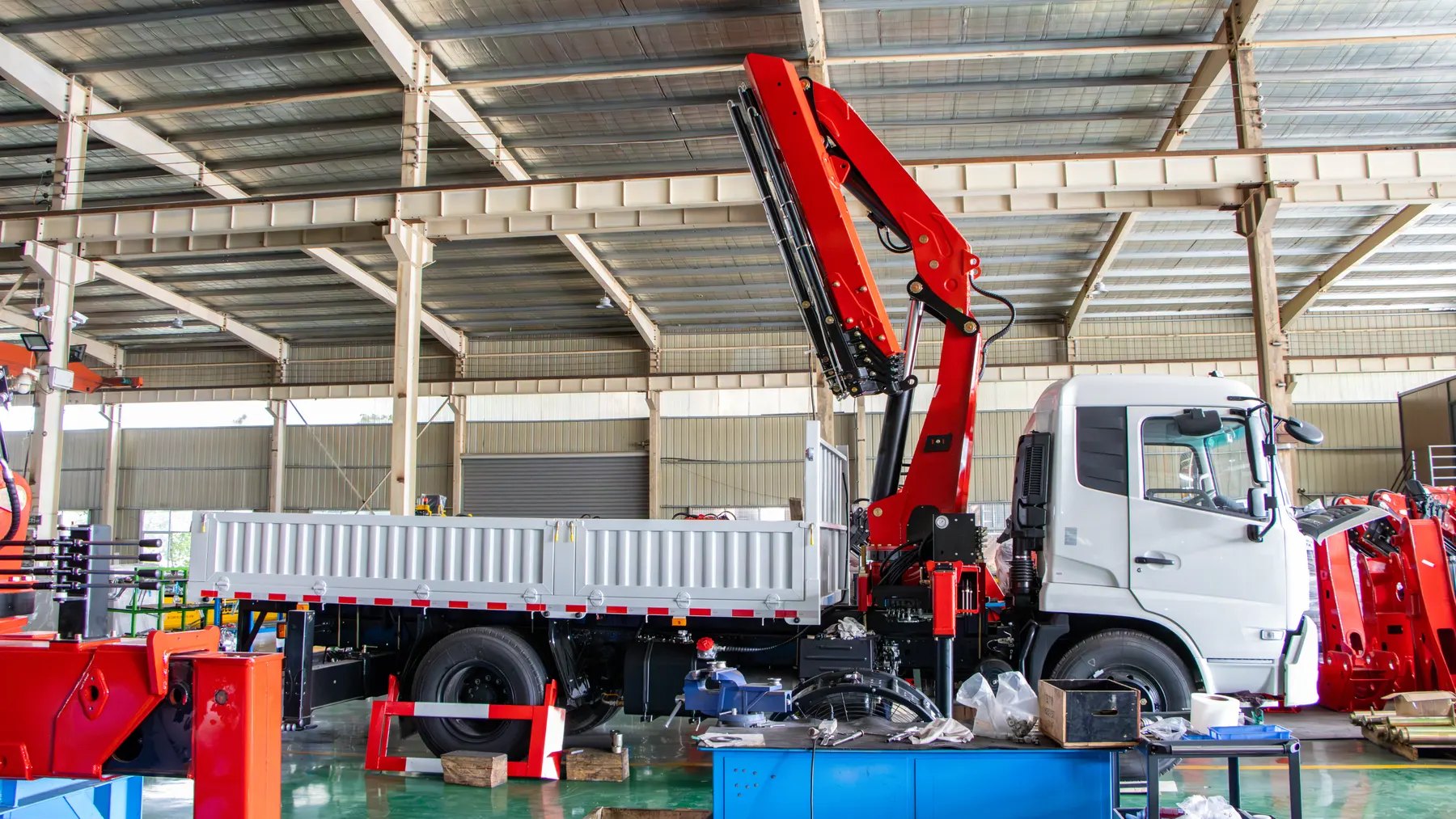
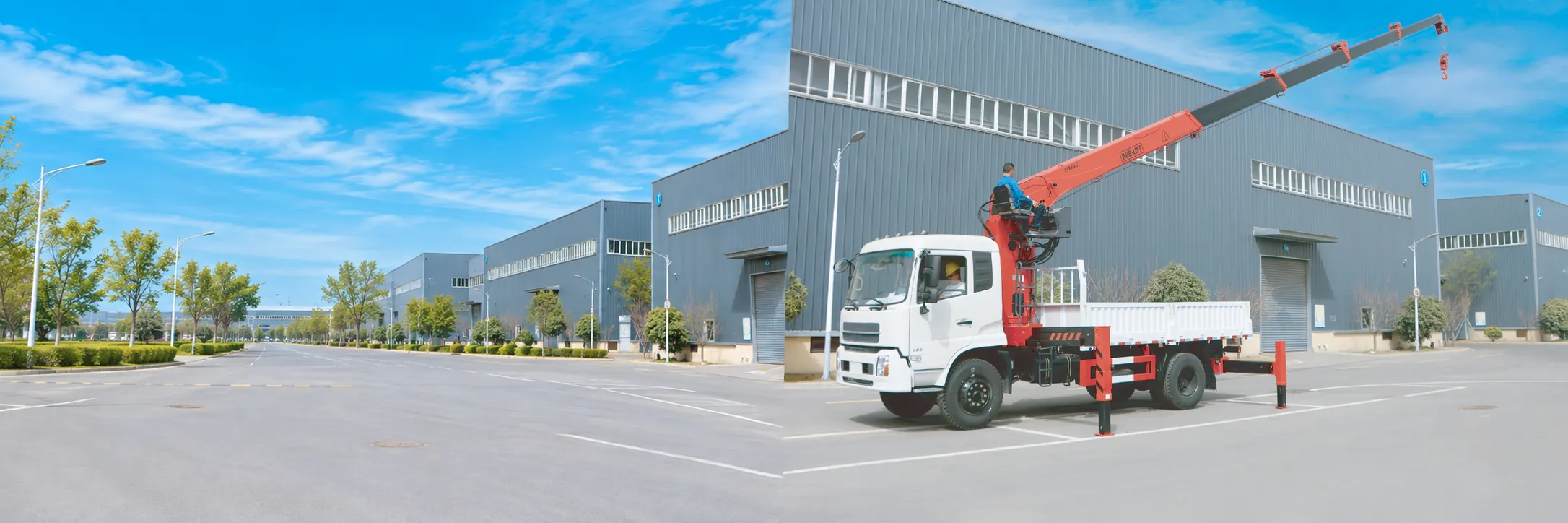
The inspection items and intervals are taken from OSHA 29 CFR 1926.1412 and the HSE guidance on thorough examination under LOLER, read in October 2026. The pressure, flow, oil tank and power figures come from the BOB-LIFT technical-department drawings of the SQ08ZA3+1, SQ1ZA4, SQ2ZA4, SQ3.2ZA3, SQ4ZA3, SQ5ZA3 and SQ5SA3. The photos show a real SQ4ZA3 at our factory. The figures were reviewed by Achord Chan, Product Operations Director, against the current drawings in October 2026. Editorial note: this guide does not replace your crane’s operating manual or local regulations.
Need parts, a manual or service help?
BOB-LIFT has built truck mounted cranes since 2003 and exported them to 124 countries and regions. According to our 2026 product catalogue, they are supported by more than 30 distributors and 12 overseas after-sales service locations. Our cranes are CE marked under the Machinery Directive 2006/42/EC and EAC certified, and production is ISO 9001 and ISO 14001 certified. Every crane carries a 12-month whole-machine warranty, common spare parts ship within 48 hours, and our service team replies within 12 hours and can guide repairs by video call. You can read more about us and our factory on the About us page. Tell us your crane model and serial number and we will send the operating manual, the drawing with its hydraulic figures, or the spare parts you need. Contact us to start.