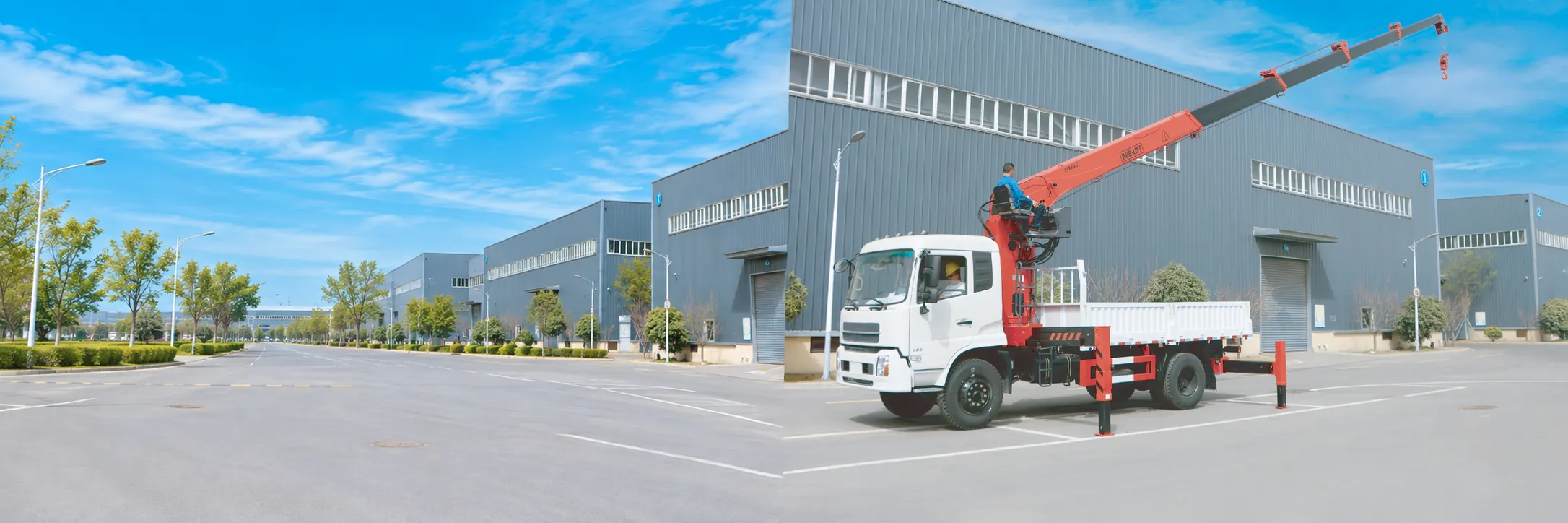

LOLER is the Lifting Operations and Lifting Equipment Regulations 1998. It is the law in Great Britain for every crane and lifting accessory used at work, and that includes a lorry loader. For an owner, it means five things. Plan and supervise every lift. Mark the safe working load. Have a competent person thoroughly examine the crane before first use and after it is fitted to the truck. Repeat that examination at least every 12 months for the crane and every 6 months for forks, slings and grabs. Keep the written reports. Northern Ireland has its own 1999 rules with the same intervals.
We have built truck mounted cranes in Xuzhou since 2003. UK buyers often ask what LOLER means for them once a new crane arrives and a local body builder fits it to their truck. This guide explains what LOLER stands for and who it applies to. It covers the rules that matter for a lorry loader, when each check is due, what a “LOLER certificate” really is, and how LOLER and PUWER fit together. Every rule is quoted from the official text or from HSE guidance.
Key takeaways
- LOLER is SI 1998/2307. It applies in Great Britain to employers, the relevant self-employed and anyone who controls lifting equipment. HSE’s guidance lists a loader crane fitted to a lorry as lifting equipment.
- Forks, slings, shackles and grabs are lifting accessories. They need a thorough examination at least every 6 months, and the crane at least every 12 months, unless an examination scheme says otherwise.
- A crane whose safety depends on how it was installed must be examined by a competent person after fitting and before first use. That matters when a crane is shipped alone and fitted to a truck in the UK.
- The “LOLER certificate” is the written report of thorough examination. LOLER Schedule 1 lists the 11 items it must contain.
- Pre-use checks, inspections and thorough examinations are three different things. LOLER does not require a load test at every examination. The competent person decides.
What is LOLER and what does LOLER stand for?
LOLER stands for the Lifting Operations and Lifting Equipment Regulations 1998. It is statutory instrument 1998 No. 2307. Regulation 1 says the rules came into force on 5 December 1998, and regulation 3 says they apply in Great Britain. Both are in the official text on legislation.gov.uk. Northern Ireland has a separate law, the Lifting Operations and Lifting Equipment Regulations (Northern Ireland) 1999. Its regulation 9 sets the same 6-month and 12-month examination intervals.
HSE’s LOLER overview says the rules “place duties on people and companies who own, operate or have control over lifting equipment”. The Approved Code of Practice L113, Safe use of lifting equipment (second edition, 2014) supports them. It is not law itself, but it has a special legal status. Four definitions in regulation 2 settle most questions:
- Lifting equipment means “work equipment for lifting or lowering loads and includes its attachments used for anchoring, fixing or supporting it”.
- Accessory for lifting means “lifting equipment for attaching loads to machinery for lifting”.
- Lifting operation means “an operation concerned with the lifting or lowering of a load” (regulation 8(2)).
- Load “includes a person”.
Who has duties under the LOLER regulations?
Regulation 3 puts the duties on the employer for lifting equipment “provided for use or used by an employee of his at work”. The same duties apply to a relevant self-employed person for equipment “he uses at work”. They also apply to “a person who has control to any extent of” the equipment, of the people who use it, or of “the way in which lifting equipment is used”. So a fleet owner, an owner-driver and a site that controls a delivery lift can all have duties. Regulation 3(5) leaves out the seller. The duties do not apply to equipment “supplied by him by way of sale, agreement for sale or hire-purchase agreement”.
Hired lorry loaders are a common trap. HSE’s equipment FAQs say the hire firm usually arranges examinations of hired cranes. But they add that “The responsibility in law, however, rests upon the user and they should, therefore, always satisfy themselves at the outset that there is a current report of thorough examination”. Ask for that report before the first lift.
Is a lorry loader lifting equipment under LOLER?
Yes. Paragraph 28 of L113 lists examples of lifting equipment. Item (p) is “a loader crane fitted to a lorry, eg used to raise bins for delivery duties”. HSE’s page on safe lifting by machine also names “vehicle tail lifts and cranes fitted to vehicles”. The definition includes attachments “used for anchoring, fixing or supporting it”. So the crane’s mounting and outriggers are part of the lifting equipment too. What hangs on the hook is a separate question. Paragraph 29 of L113 says “Lifting accessories would include such items as slings, removable eyebolts, chains, ropes, shackles, grabs, magnets, vacuum lifters, crane forks, lifting beams and spreaders”.
| Item on a lorry loader job | LOLER category | Default periodic thorough examination |
|---|---|---|
| Loader crane with column, booms, mounting and outriggers | Lifting equipment | At least every 12 months |
| Overload limiter or load indicator on the crane | Part of the lifting equipment | Included in the crane’s examination |
| Pallet forks, chain or webbing slings, shackles | Accessories for lifting | At least every 6 months |
| Grab, lifting beam or spreader | Accessories for lifting | At least every 6 months |
| Pallet, skip or bulk bag being carried | Normally part of the load | No thorough examination, but inspect it |
Pallets and skips are usually part of the load. The HSE FAQs say that where they are “not permanently attached to the lifting machinery it would normally be considered to be part of the load and a ‘Thorough Examination’ is not required”. Safety devices are different. The same FAQs say cut-outs that act “when the SWL is exceeded, should be regarded as part of the lifting equipment and be included in the thorough examination”. They add: “This applies also to any radius/load indicator”. For devices that hang between hook and load, see our guide to below-the-hook lifting devices. For slings and shackles, see our guide to crane rigging and slings.
A grab shows how the categories split on one machine. In the film below, our SQ8ZA4 8 t knuckle boom crane works with a multi-tine grab. Under LOLER the crane is lifting equipment on a 12-month cycle. The grab is an accessory on a 6-month cycle, unless a scheme says otherwise.
Which LOLER requirements matter most for a lorry loader?
LOLER has 17 regulations and two schedules. Eight of them shape a lorry loader owner’s year. The table quotes each one briefly. The sections after it explain the ones people most often get wrong.
| Regulation | What it requires (quoted) | What it means on a lorry loader |
|---|---|---|
| 4 Strength and stability | “adequate strength and stability for each load, having regard in particular to the stress induced at its mounting or fixing point” | Subframe, mounting bolts, chassis and outriggers must suit the crane and the load |
| 5 Lifting persons | Extra duties for “lifting equipment for lifting persons” | Applies when a work basket is fitted. On BOB-LIFT cranes a basket is an extra-cost option |
| 6 Positioning and installation | Reduce the risk of the equipment or load “striking a person” or the load “drifting”, “falling freely” or “being released unintentionally” | Where the truck parks, slew zone, exclusion zone |
| 7 Marking | Safe working load marked, and for each configuration where it varies | Load chart or indicator for every boom and outrigger set-up |
| 8 Organisation | Every lift “properly planned by a competent person”, “appropriately supervised” and “carried out in a safe manner” | A lift plan suited to the job, even a short one |
| 9 Examination and inspection | Thorough examination before first use, after installation, periodically and after exceptional circumstances | The examination calendar |
| 10 Reports and defects | Written report; defects notified “forthwith” | Stop using the crane until a dangerous defect is fixed |
| 11 Keeping information | Keep declarations and reports for set periods | A crane file in the office and evidence in the cab |
Regulation 4: the mounting point is part of the check
Regulation 4 asks for strength and stability “having regard in particular to the stress induced at its mounting or fixing point”. On a lorry loader, that point is the subframe and the bolts that hold the crane to the chassis. The outriggers, which carry the moment into the ground, count as well. Our truck mounted crane installation guide explains how a crane is matched and mounted. The guide to crane outriggers and ground bearing pressure covers set-up on site.
Regulations 5 and 7: people and marking
A BOB-LIFT crane lifts materials as standard. A work basket for lifting people is available as an option, charged separately. Once a basket is fitted and used, regulation 5 applies in full, and regulation 9 sets a thorough examination at least every 6 months for equipment that lifts people. Without a basket, regulation 7(e) matters. Equipment “not designed for lifting persons but which might be so used in error” must be “clearly marked to the effect that it is not designed for lifting persons”.
For the load itself, regulation 7(b) covers machines whose safe working load “depends on its configuration”. Either the machine is marked for each configuration, or “information which clearly indicates its safe working load for each configuration is kept with the machinery”. A knuckle boom crane is a clear case. The load chart of our SQ8ZA4 8 t knuckle boom crane gives 8,000 kg at 2.0 m and 3,700 kg at 4.461 m. It gives 2,470 kg at 6.445 m, 1,820 kg at 8.465 m and 1,420 kg at 10.515 m. One number on a plate cannot describe that. L113 paragraph 193 says the information “can be in the form of an indicator, plate, chart or certificate which is readily available to the operator”. Our safe working load guide explains SWL, WLL and the marking of lifting gear in more depth.
Regulation 8: planned, supervised, safe
Every lifting operation must be “properly planned by a competent person”, “appropriately supervised” and “carried out in a safe manner”. HSE notes that simple, routine lifts may need only “minimal on-the-job planning by trained, competent people”. Complex lifts need detailed plans. Our crane lift plan guide sets out the steps. The crane operator licence guide explains how competence and training work in the UK, where there is no single legal licence.
When does a lorry loader need a LOLER thorough examination?
Regulation 9 sets four triggers. The text of regulation 9 is the legal source. HSE’s leaflet INDG422, Thorough examination of lifting equipment explains it in plain English.
- Before first use. Equipment must be thoroughly examined “before lifting equipment is put into service for the first time”. The exception is equipment that “has not been used before”, where the employer has a declaration of conformity made “not more than 12 months before” it goes into service.
- After installation. Where “the safety of lifting equipment depends on the installation conditions”, it must be examined “after installation and before being put into service for the first time”.
- Periodically. Equipment exposed to deterioration must be examined at set intervals. These are “in the case of lifting equipment for lifting persons or an accessory for lifting, at least every 6 months” and “in the case of other lifting equipment, at least every 12 months”. The third option is “in either case, in accordance with an examination scheme”.
- After exceptional circumstances. Again “each time that exceptional circumstances which are liable to jeopardise the safety of the lifting equipment have occurred”.

LOLER does not define exceptional circumstances. L113 paragraph 307 lists “its involvement in an accident or dangerous occurrence such as overloading, component failure etc”. It also lists “a significant change in conditions of use” and “long periods out of use”. Paragraph 327 adds that “failed safe load indicators may allow overload to go undetected”. The HSE FAQs also list “the replacement of any parts that are subject to thorough examination”. On a lorry loader, think of an outrigger that sank, a boom that struck a building or a new slewing part. Each one is a reason to call the examiner before the next lift.
An examination scheme is the other way to set intervals. INDG422 says it “can be drawn up by the user, owner, manufacturer or some other independent person, as long as they have the necessary competence”. A longer period “must be based on a rigorous assessment of the risks”. The HSE FAQs say a competent person may set a stricter scheme in some cases. Examples are equipment that “is used in a potentially corrosive environment (eg seafront)” or “is subjected to particularly heavy use”. Many coastal and builders’ merchant lorry loaders fit that description.
Fitting a new crane to a UK truck: the examination after installation
How a crane reaches the road decides who fits it. If a buyer purchases the truck in China, we can fit the crane at our factory. If the buyer purchases the truck locally, as most UK buyers do, we ship the crane only. A local body builder fits it, and we support the work remotely. Either way, the crane only becomes a working lorry loader once it is bolted to a chassis with its outriggers set.
The HSE FAQs are direct on this point. Equipment needs an examination before first use unless it has a declaration of conformity under a year old “and the lifting equipment was not assembled on site / dependant on the conditions of installation”. They add that “If it was assembled on site or depends for safety on the way it was installed, it must be examined by a competent person to confirm that the assembly was correct and safe”.
L113 paragraph 319 adds a nuance. It says “installation” in regulation 9(2) mainly means equipment put up on site, such as tower cranes. It “would not apply to portable or mobile lifting equipment which could move from one location to another” within the scope of its current report. That is about moving a working crane between jobs. Mounting a crane on a chassis for the first time is different. The subframe, the fixings and the stability on that truck did not exist before.
Our practical reading, which your examiner and body builder should confirm, is simple. After the crane is fitted to the truck in the UK, have a competent person thoroughly examine the complete lorry loader before the first lift. Keep that report. L113 paragraph 300 warns about independence where “the person assembling the equipment may also be the person assessing whether it is safe for use”. So the person who signs the report should be able to judge the fitting objectively.

Product-supply law is a separate matter from LOLER. HSE’s overview says “Most lifting equipment and lifting accessories will also fall within the scope of the Supply of Machinery (Safety) Regulations”. Such equipment must be “subject to appropriate conformity assessment, labelled and accompanied by a Declaration of Conformity (DoC) before being placed on the market or brought into use”. Regulation 11(1) of LOLER then says the user must keep any declaration received “for so long as he operates the lifting equipment”. Before ordering, ask the supplier which conformity documents come with the crane. Ask your body builder which documents they provide for the finished vehicle. From the crane maker, keep at least these:
- The operator’s manual in English, with the daily check and maintenance intervals.
- The dimension drawing and load chart for the exact model and configuration, which also serve as the regulation 7(b) information.
- The mounting and installation instructions given to the body builder.
- A description of the overload device fitted and how to check it.
- Any conformity documents agreed with the supplier.
LOLER checks, inspections and thorough examinations compared
Three levels of checking are often lumped together as “LOLER inspection”. The law treats them differently. HSE’s page on thorough examinations and inspections says inspections are “often weekly, but this may be on a monthly or quarterly basis (eg the checks undertaken by an operator on their crane)”.
| Level | Who | When | Records |
|---|---|---|---|
| Pre-use check | The trained operator | Before use, each shift or day | Not normally required for the simplest checks (HSE), though many fleets log them |
| Inspection (regulation 9(3)(b)) | A competent person, often the operator or maintenance staff | At suitable intervals set by risk assessment and the manufacturer | A written record, kept until the next one (regulations 10(2), 11(2)(b)) |
| Thorough examination (regulation 9) | An independent competent person, not the person who maintains the crane | Before first use, after installation, every 12 or 6 months or per scheme, after exceptional events | A written report with the Schedule 1 contents, kept for the periods in regulation 11 |
HSE’s inspection guidance says “Records are not normally required to be made for the simplest pre-use checks”. Inspections, says the thorough examination page, “need to be undertaken by suitably trained and competent people, which can often be the lifting equipment operator or maintenance personnel”. The actual items to check on a truck mounted crane are in our truck mounted crane inspection checklist. You can print it for the cab.
What does a LOLER examination of a lorry loader cover?
HSE says the scope depends on “the professional judgement of the competent person”. But it “needs to include all matters which affect the safety of the lifting equipment, including likely deterioration with time”. The methods HSE lists are “visual examination and functional checks”, “measurements of wear” and “(in some cases) traditional NDT (non-destructive testing) and load testing”. HSE adds that “Some disassembly or internal examination of parts may also be required”. For a crane, L113 paragraph 352 mentions “the correct operation of limiters and indicators, checking tyre pressures (if mobile equipment), checking that no components are missing (eg bolts) and that the controls work properly”.
On a knuckle boom lorry loader, examiners typically look at the areas below. The list is general practice, not a legal checklist:
- Mounting bolts, subframe and the chassis around the crane base.
- Outrigger beams, legs, holding valves and any outrigger interlocks.
- Column, slewing system and boom pins, bushes and wear pads.
- Cylinders, hoses and the hydraulic holding and check valves.
- Hook, safety latch and any winch, rope and limit switches fitted.
- The overload limiter or load indicator and its warning function.
- Controls, emergency stop, markings and the load chart on the crane.
Our guide to the load moment indicator explains how that device works and how to check it each shift. Note also L113 paragraph 340. It says lorry loaders on the road “will also be subject to MOT examination requirements”. It adds that “LOLER and/or PUWER examinations serve a different purpose and do not replace the MOT requirement”.
Does LOLER require load testing?
Not routinely. Regulation 2 says a thorough examination includes testing only “where it is appropriate to carry out testing for the purpose”. HSE states that “Most lifting equipment does not need routine testing as part of the thorough examination – in fact some overload tests can cause damage to lifting equipment”. L113 paragraph 310 puts the decision with the examiner. It says “The competent person should decide whether or not a load test is necessary, and the nature of the test, as part of the thorough examination”. Paragraph 311 adds that the examiner should consider the manufacturer’s instructions. Our crane load test guide covers test types, test weights and records.
What is a LOLER certificate? Reports, defects and records
LOLER itself never uses the word certificate. What people call a LOLER certificate or LOLER cert is the report of thorough examination in regulation 10. The examiner must make it “in writing authenticated by him or on his behalf by signature or equally secure means”. HSE says “There is no longer a defined format or form for such a report, provided that all 11 items listed in the Schedule are included”. Schedule 1 asks for these items, in summary:
- The employer’s name and address, and the address where the examination was made.
- “Particulars sufficient to identify the lifting equipment including where known its date of manufacture”.
- The date of the last thorough examination.
- The safe working load, or for configurable equipment “its safe working load for the last configuration in which it was thoroughly examined”.
- For a first examination after installation, that it is such an examination and “(if such be the case) that it has been installed correctly and would be safe to operate”.
- For other examinations, which interval or trigger applies, and whether the equipment would be safe to operate.
- Any defect, the repair needed, and for a defect that could become dangerous “the time by which it could become such danger”.
- “the latest date by which the next thorough examination must be carried out” and, where testing was done, “particulars of any test”.
- The date of the examination, the examiner’s name, address and qualifications, the signatory, and the date of the report.
Defects have strict follow-up. The examiner must “notify the employer forthwith of any defect” that is or could become a danger. Where there is “an existing or imminent risk of serious personal injury”, a copy also goes to the enforcing authority. Regulation 10(3) then says the employer must ensure the equipment is not used “before the defect is rectified”. For a defect that could become dangerous, the deadline in the report applies. INDG422 adds that a competent person who fails to report a defect “simply because it has been remedied on the spot, is disguising a potentially dangerous situation”.
| Record | How long to keep it |
|---|---|
| Report of the examination before first use (crane) | Until you stop using the equipment |
| Report of the examination before first use (accessory) | Two years after the report |
| Report of the examination after installation | Until the equipment is no longer used where it was installed |
| Periodic or scheme examination report | Until the next report or two years, whichever is later |
| Inspection record | Until the next inspection record |
| Declaration of conformity | As long as you operate the equipment |
A lorry loader travels, so the evidence must travel with it. Regulation 9(4) covers equipment used away from your undertaking. It must be “accompanied by physical evidence that the last thorough examination required to be carried out under this regulation has been carried out”. L113 paragraph 356 gives the example of “a contractor carrying a sling in your van”. That contractor should carry evidence that the sling has been examined. A copy of the current reports for the crane and its accessories in the cab meets that need.
LOLER and PUWER: what is the difference?
PUWER, the Provision and Use of Work Equipment Regulations 1998, covers all work equipment. LOLER adds the specific rules for lifting. The HSE LOLER overview says “In most cases, lifting equipment is also work equipment so the Provision and Use of Work Equipment Regulations (PUWER) will also apply (including inspection and maintenance)”. HSE’s PUWER overview lists duties such as keeping equipment “maintained in an efficient state, in efficient working order and in good repair”. Another duty is giving users “adequate training”.
INDG422 explains the split with a forklift, and the same logic fits a lorry loader. The LOLER examination covers the lifting mechanism. PUWER inspection covers the non-lifting parts, and maintenance of both is a PUWER duty. INDG422 also warns that a thorough examination “may indicate areas of poor maintenance, but is not intended to replace it”. So the yearly LOLER examination does not replace the service plan in your crane manual.
Example scenario: a two-year LOLER calendar for a lorry loader
Example scenario (an illustration, not a customer record). A UK builders’ merchant buys a BOB-LIFT SQ8ZA4. It is an 8,000 kg knuckle boom crane rated at 16.7 t·m, with a self weight of 3,050 kg and an outrigger span of 2,310–5,610 mm on its drawing. The merchant buys the truck locally, so we ship the crane only and a local body builder fits it. The merchant also runs one set of pallet forks, two chain slings and a grab. The dates below are ASSUMED.
- ASSUMED March 2027, after fitting: a competent person examines the complete lorry loader before first use, plus the forks, slings and grab. Reports go in the crane file, with copies in the cab.
- Every shift: the driver makes the pre-use check from the manual, including the limiter warning.
- Monthly (the examiner’s advice in this example): a recorded inspection of the outriggers, hoses, pins and marking.
- September 2027, 6 months after the ASSUMED start: forks, slings and grab are examined again.
- ASSUMED November 2027: an outrigger leg sinks into a soft verge and the crane is stopped. Before the next lift, the crane and the accessories in use are thoroughly examined.
- March 2028, 12 months after the ASSUMED start: periodic examination of the crane (12 months) and the accessories (6 months).
Later, the merchant’s examiner may draw up an examination scheme, for example because the trucks work near the coast. The scheme’s intervals then replace the 6 and 12 months shown here. For outrigger set-up on soft ground, see our guide to crane mats and outrigger pads.
What to ask your crane supplier before ordering for the UK
Most LOLER paperwork starts with what the crane maker supplies. Before you order, ask for these in writing:
- The dimension drawing and load chart for the exact model and every configuration you will use.
- The operator’s manual in English, with daily checks and service intervals.
- Mounting instructions for your body builder and the remote support available during fitting.
- Which overload device is fitted and how the operator checks it.
- Which conformity documents come with the crane.
- Recommended spare parts for the items an examiner most often rejects, such as hoses and wear pads.
Every BOB-LIFT crane is listed with a load moment limiter, as our article on the lifting moment of a crane explains. Each model in our knuckle boom truck mounted cranes range has its own drawing and load chart. For UK lorry terms and sizes, see our crane lorry guide.
Frequently asked questions
What does LOLER stand for?
LOLER stands for the Lifting Operations and Lifting Equipment Regulations 1998 (SI 1998/2307). It applies in Great Britain to lifting equipment used at work, including lorry loaders. Northern Ireland has its own 1999 version with the same examination intervals.
How often does a lorry loader need a LOLER inspection?
The crane needs a thorough examination at least every 12 months. Its forks, slings, shackles and grabs need one at least every 6 months, unless a competent person’s examination scheme sets other intervals. Extra examinations are needed after fitting, before first use and after exceptional circumstances.
Is a LOLER certificate a legal requirement?
The legal requirement is a written report of thorough examination with the 11 items in LOLER Schedule 1. People call it a LOLER certificate. Keep it for the periods in regulation 11 and carry a copy with the lorry loader.
Who can carry out a LOLER thorough examination?
A competent person with the practical and theoretical knowledge to find defects and judge how serious they are. HSE says they must be independent and impartial and should not be the same person who maintains the crane. They may work for another company or for you.
Does LOLER testing mean a load test every year?
No. HSE says most lifting equipment does not need routine testing as part of the thorough examination. The competent person decides whether a load test is needed and what kind, taking the manufacturer’s instructions into account.
How we compiled this guide
We quoted the regulations from the current text of the Lifting Operations and Lifting Equipment Regulations 1998 (SI 1998/2307) on legislation.gov.uk. We also used regulation 9 of the Northern Ireland regulations of 1999. HSE guidance comes from the LOLER overview, the thorough examination page and the equipment FAQs. It also comes from the pages on safe lifting by machine, PUWER and inspection, and from leaflets INDG422 and INDG290. The last source is the approved code of practice L113 (second edition, 2014). We read all of them in November 2026. The SQ8ZA4 figures come from its current BOB-LIFT dimension drawing and load chart. The video is our own factory film. The list of areas an examiner looks at is general practice. The reading of regulation 9(2) for cranes fitted in the UK is our own view, so confirm it with your competent person. Achord Chan, Product Operations Director, reviewed the guide in November 2026. It does not replace legal advice, your crane’s manual or your examiner’s judgement.
Planning a lorry loader for UK work?
Tell us the loads, the working radius, the truck you plan to use and who will fit the crane. We will recommend a knuckle boom truck mounted crane and send its dimension drawing and load chart. We will also support your body builder remotely during fitting. Every crane carries a 12-month warranty on the whole machine, common spare parts leave the factory within 48 hours, and our service team answers within 12 hours. Contact us for a quotation.