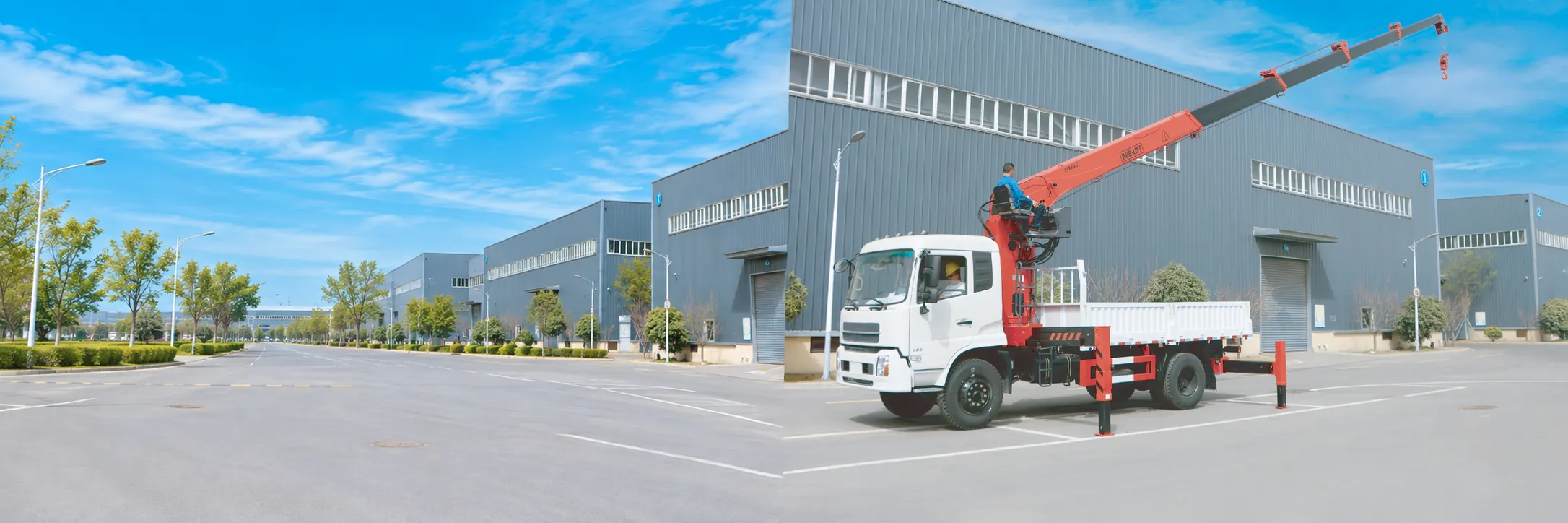

A crane operator license is a permit or certificate that shows a person is qualified to run a crane. Whether you need one for a truck mounted crane depends on the country and the size of the crane. In the United States, construction work generally requires OSHA operator certification for cranes rated above 2,000 lb, with specific exemptions. In Australia, vehicle loading cranes rated at 10 metre tonnes or more require a CV high risk work licence. In the United Kingdom there is no crane licence in law, but the employer must make sure each operator is trained and competent.
We have built truck mounted cranes in Xuzhou since 2003, and buyers often ask what their operators will need. This guide sums up the rules in three big markets. It explains the exemptions for knuckle boom cranes and shows where each of our crane sizes falls, based on its drawing.
Key takeaways
- In US construction, 29 CFR 1926.1427 requires operators of covered cranes, including articulating and truck-mounted cranes, to be trained, certified or licensed, and evaluated by the employer.
- OSHA certification is valid for five years, and cranes rated at 2,000 lb or less are excluded from the certification requirement, although training is still mandatory.
- A knuckle boom crane that only transfers delivered material from the truck to the ground is excluded from the OSHA crane standard, but the exclusion ends once the crane holds material in place or handles prefabricated components.
- In New South Wales, a vehicle loading crane with a capacity of 10 mt or more requires a CV high risk work licence, available from 18 years of age and valid for five years.
- Our 800 kg SQ08ZA3+1 pickup crane falls under the US 2,000 lb exclusion, every larger BOB-LIFT truck crane exceeds it, and models from SQ5ZA3 (10.5 t·m) upwards reach the CV threshold.
Do you need a license to operate a truck mounted crane?
In most places the answer is yes for any crane of real size, but the rules work in different ways. Some countries issue a licence for each class of crane. Others ask for a certificate from an approved testing body. Others leave it to the employer to pick, train and watch over its operators. The crane’s rated capacity or lifting moment often decides which rule applies, so the figures on the drawing matter.
The sections below cover the United States, Australia and the United Kingdom, because their rules are published in full and are often used as a reference. If you work elsewhere, ask your national safety authority before the crane arrives. Training can take weeks to arrange.
United States: OSHA crane operator certification
The OSHA construction standard for cranes, 29 CFR 1926.1400, applies to power-operated equipment that can hoist, lower and horizontally move a suspended load. Its scope explicitly includes “articulating cranes (such as knuckle-boom cranes)” and mobile cranes such as “commercial truck-mounted, and boom truck cranes”, so both knuckle boom and telescopic truck cranes are covered when they are used in construction.
For this equipment, 29 CFR 1926.1427(a) states that “the employer must ensure that each operator is trained, certified/licensed, and evaluated” before running the crane. The rule allows three routes:
- Accredited testing body. The operator passes written and practical tests from a body that a national agency has accredited. The certificate is issued by crane type, or by type and capacity. It moves with the operator from one employer to the next and lasts five years.
- Audited employer program. An employer can certify its own operators through an audited test program. That certificate is only valid while the operator works for that employer, again for up to five years.
- Government licence. Where a state or city licenses crane operators, the operator must hold that licence. It counts for the period the office sets, but for no more than five years.
A certificate alone is not enough. Under 1926.1427(f), the employer must also check each operator in a practical test on the crane they will use. Someone who is not yet certified may only work as an operator-in-training, with a trainer watching on site at all times.
US exemptions for small cranes and material delivery
Two exemptions are particularly relevant to truck mounted cranes. First, 1926.1427(a)(2) excludes “equipment with a maximum manufacturer-rated hoisting/lifting capacity of 2,000 pounds or less”. Such cranes are covered by 29 CFR 1926.1441, which still requires the employer to “train each operator, prior to operating the equipment, on the safe operation of the type of equipment the operator will be using”. So small cranes need training, but not a certificate.
Second, the rule in 1926.1400(c)(17) leaves out “articulating/knuckle-boom truck cranes that deliver material to a construction site when used to transfer materials from the truck crane to the ground, without arranging the materials in a particular sequence for hoisting”. A second part covers placing sheet goods or bagged building materials onto a building with a fork or cradle. That only applies when the crane has “a properly functioning automatic overload prevention device”.
The delivery exemption is narrower than many buyers think. It ends when the crane holds material in place while workers fix it to the building. It also ends when the load is a prefabricated part, such as roof trusses, wall panels or precast concrete, or when the crane lifts structural steel. In those cases the full crane standard applies, and so does operator certification. Outside construction, the general industry rule for truck cranes, 29 CFR 1910.180(b)(3), states that “only designated personnel shall be permitted to operate a crane covered by this section”.
Australia: the CV vehicle loading crane licence
Australian states license crane operation as high risk work. According to the SafeWork NSW high risk work licence page, “vehicle loading cranes with a capacity of 10 mt or more (CV) are mounted on a vehicle to move a load”. The unit is the metre tonne, the same lifting moment that our drawings express in t·m, which means the threshold depends on moment rather than on maximum tonnage alone.
The same page explains that a CV licence holder can operate a vehicle loading crane and conduct the full range of slewing operations, provided the equipment is suitable, operated within its parameters and the operator is adequately trained. The slewing mobile crane class C2 (up to 20 t) incorporates the CN and CV classes, and the C6 class incorporates C2, CN and CV. Applicants must be at least 18 years old, and high risk work licences last for five years. Licensing is administered by each state and territory, so confirm the details with your local regulator.
United Kingdom: competence instead of a licence
UK law has no crane licence class. Instead, regulation 8 of LOLER 1998 requires every lifting operation to be “properly planned by a competent person”, “appropriately supervised” and “carried out in a safe manner”. Also, regulation 9 of PUWER 1998 requires employers to ensure that everyone who uses work equipment has “received adequate training for purposes of health and safety”.
HSE guidance on planning and organising lifting operations adds that the people involved “should have sufficient theoretical and practical knowledge of the work and equipment in question”. In practice, most UK employers show this through recognised industry training and testing. The legal duty still sits with the employer.

Where BOB-LIFT truck cranes fall
The table compares a range of BOB-LIFT truck cranes with the two limits above. Maximum capacity and lifting moment come from each model’s drawing, and the pound figures are conversions. The table only shows whether a limit is reached. Whether a job needs a licence also depends on the work, the place and any exemption.
| Model | Boom type | Max capacity | Max lifting moment | Above 2,000 lb (US) | 10 mt or more (NSW CV) |
|---|---|---|---|---|---|
| SQ08ZA3+1 | Knuckle | 800 kg (1,764 lb) | 1.3 t·m | No | No |
| SQ1ZA3+1 | Knuckle | 1,600 kg (3,527 lb) | 2.2 t·m | Yes | No |
| SQ2ZA4 | Knuckle | 2,000 kg (4,409 lb) | 4.2 t·m | Yes | No |
| SQ3.2ZA3 | Knuckle | 3,200 kg (7,055 lb) | 6.8 t·m | Yes | No |
| SQ5ZA3 | Knuckle | 5,000 kg (11,023 lb) | 10.5 t·m | Yes | Yes |
| SQ5SA4 | Telescopic | 5,000 kg (11,023 lb) | 12.5 t·m | Yes | Yes |
| SQ8ZA5 | Knuckle | 8,000 kg (17,637 lb) | 16.7 t·m | Yes | Yes |
| SQ10SA4 | Telescopic | 10,000 kg (22,046 lb) | 25 t·m | Yes | Yes |
| SQ12ZA6 | Knuckle | 12,000 kg (26,455 lb) | 27 t·m | Yes | Yes |
| SQZ430 | Knuckle | 20,000 kg (44,092 lb) | 42.3 t·m | Yes | Yes |
| SQ20SA5 | Telescopic | 20,000 kg (44,092 lb) | 50 t·m | Yes | Yes |
| SQZ1000 | Knuckle | 50,000 kg (110,231 lb) | 90 t·m | Yes | Yes |
Two conclusions follow. First, only our smallest pickup crane, the SQ08ZA3+1 at 800 kg, falls under the US 2,000 lb exclusion, so its operators need training but not formal certification; our 12 V electric truck crane SQ1Z-E is rated at 1,000 kg, approximately 2,205 lb, and is therefore just above the limit, like every larger model. Second, the small knuckle boom cranes up to 6.8 t·m remain below the NSW CV threshold, while every model from 10.5 t·m upwards reaches it. Our guide to crane lifting moment explains how the t·m figure is calculated.
Example scenario (an illustration, not a customer record): a building supplier in New South Wales compares an SQ3.2ZA3 at 6.8 t·m with an SQ5ZA3 at 10.5 t·m for delivering pallets of blocks. The larger crane handles heavier pallets at longer reach, but it reaches the CV threshold, so the company must confirm that its drivers hold, or can obtain, a CV licence before ordering. The smaller crane avoids that class, yet its drivers still require adequate training under the general duties.
What a loader crane operator must know
Whatever the legal route, the skills are much the same. The OSHA list in 1926.1427(j) includes the crane’s controls and how it performs, using and working out figures from the load chart, and judging whether the ground can carry the crane. On a truck mounted crane, competent operation covers:
- Reading the load chart correctly for the boom configuration and radius, as described in our guide on how to read a crane load chart.
- Assessing ground conditions and deploying the outriggers fully on adequate pads, as explained in our guide to crane outriggers and ground bearing pressure.
- Understanding the overload protection system and never bypassing it.
- Operating safely from the control station, the high seat or a radio remote control, with a clear view of the load.
- Recognising power line hazards, keeping people out of the slewing zone, and stowing the boom and hook correctly before travel.
What we supply with a crane
BOB-LIFT does not issue operator licences or certificates. These come from your regulator, an approved testing body or your employer’s program. What we supply is the paperwork an assessor and an operator need for the machine itself: the drawing and load chart for your exact model, installation guidance, and remote support from our service team. Before shipping, every crane is mounted on our test bay and operated through lifting, slewing and outrigger functions under load, and you may request a test video showing your own crane’s serial number.
Frequently asked questions
Do you need a license to operate a knuckle boom crane?
Usually, yes. In US construction, a knuckle boom crane rated above 2,000 lb needs a certified operator, unless the delivery exemption applies. In Australia, a vehicle loading crane of 10 metre tonnes or more needs a CV licence. In the UK, the employer must make sure the operator is trained and competent.
How long is OSHA crane operator certification valid?
A certificate from an accredited testing body or an audited employer program lasts five years. A government licence lasts as long as the office sets, but OSHA accepts it for no more than five years.
Is a crane licence required in the UK?
No. UK law has no crane licence. LOLER says each lift must be planned by a competent person, supervised and done safely, and PUWER calls for adequate training. Most employers use recognised training and testing to meet these duties.
Which licence covers a truck loader crane in Australia?
The CV high risk work licence covers vehicle loading cranes with a capacity of 10 metre tonnes or more. The C2 and C6 slewing mobile crane classes also incorporate CV, and applicants must be at least 18 years old.
Does a small pickup truck crane need a licence?
It depends on its rating and the location. A crane rated at 2,000 lb or less is excluded from OSHA certification but still requires operator training, and a crane below 10 metre tonnes is below the NSW CV class. Our 800 kg SQ08ZA3+1 pickup crane is below 2,000 lb, whereas our 1 t electric crane, rated at 1,000 kg, is slightly above it.
How we compiled this guide
We compiled the capacities and lifting moments from the BOB-LIFT technical drawings of the models in the table and converted kilograms to pounds. The regulatory quotations come from the official eCFR text of 29 CFR 1910.180, 1926.1400, 1926.1427 and 1926.1441, from legislation.gov.uk, from HSE and from the SafeWork NSW website, all read in November 2026. Achord Chan, Product Operations Director, reviewed the guide in November 2026. It is general information rather than legal advice, and the requirements of your regulator always take precedence.
Choose a crane that suits your operators
Tell us where the crane will work, your heaviest load and the reach you need, and we will recommend a model with its drawing, lifting moment and load chart, so that you can confirm the licence class before ordering. Every crane carries a 12-month warranty on the whole machine, common spare parts leave the factory within 48 hours, and our service team answers within 12 hours. Contact us for a quotation.