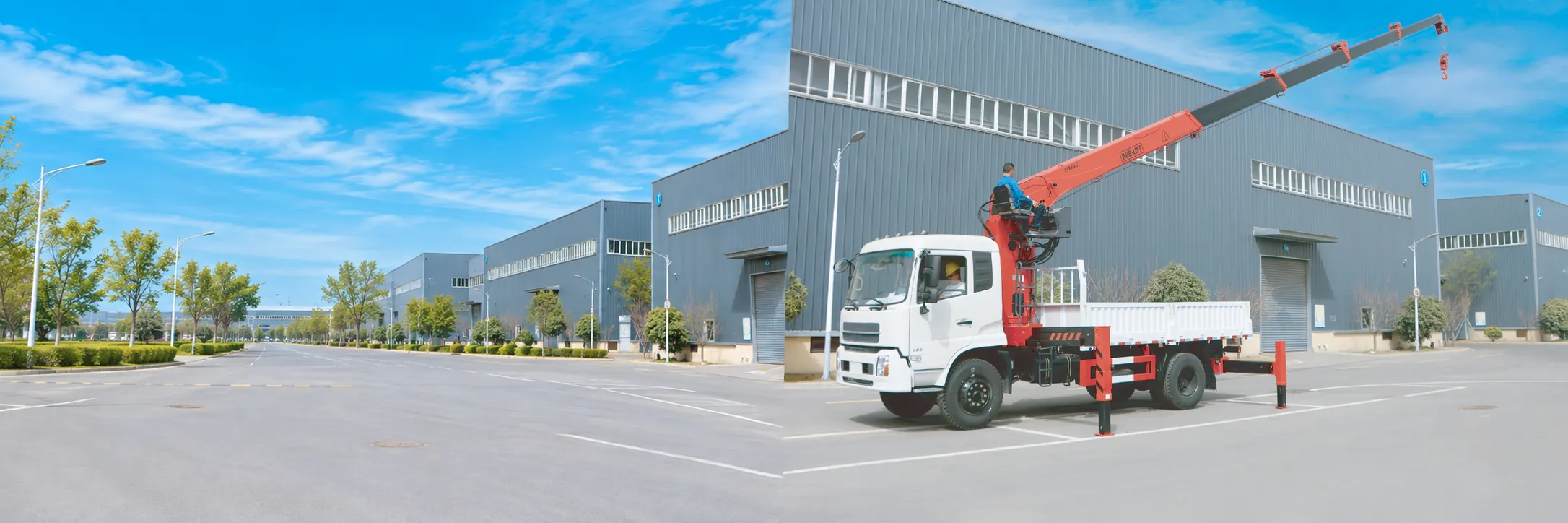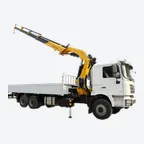
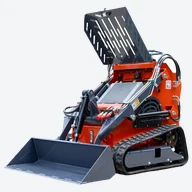

The types of cranes are the distinct designs of lifting equipment that hoist a suspended load and move it horizontally. They fall into four families: mobile cranes that travel to the job, fixed cranes that are erected in place, industrial cranes that operate on rails inside a building or yard, and marine cranes installed on vessels and quays. Each design balances outreach, capacity, set-up time and footprint differently, so the correct type depends on the job rather than on the largest figure in a brochure.
We have manufactured truck mounted cranes in Xuzhou since 2003, and buyers regularly ask us where our equipment fits among all the other categories. This guide describes 16 common crane types, explaining how each one travels and sets up, which applications it suits and where its operational limitations lie. Where we build the type, we give our actual capacity range from the technical drawings; where we do not, we say so plainly.
Key takeaways
- Cranes fall into four families: mobile, fixed, industrial and marine. The US construction crane standard names more than 20 individual kinds.
- Mobile cranes travel to the site and set up on outriggers or tracks, whereas tower cranes are erected on a foundation and remain for the duration of the project.
- We build truck mounted knuckle boom cranes from 800 kg to 50,000 kg and telescopic truck mounted cranes from 2,000 kg to 20,000 kg, together with marine cranes, spider cranes, electric mini cranes and forklift jib cranes.
- We do not build tower, crawler, all-terrain, rough-terrain, overhead or gantry cranes.
- Rated capacity is a close-in maximum, so always select a crane by the load it is rated for at your actual working radius.
What are the main types of cranes?
The most comprehensive official list appears in the US construction crane standard. Its scope, 29 CFR 1926.1400, applies whenever such equipment is used in construction. It names articulating (knuckle boom) cranes, crawler cranes, floating cranes, cranes on barges, wheel-mounted, rough-terrain, all-terrain and commercial truck-mounted mobile cranes, tower cranes, pedestal cranes, portal cranes, overhead and gantry cranes, derricks and several further categories.
For a purchaser, however, it is more practical to categorise these machines into four families according to how the crane reaches the work. The table provides the overview, and the following sections describe each type individually.
| Family | Crane types | How it reaches the work | Typical applications | Built by BOB-LIFT? |
|---|---|---|---|---|
| Mobile | Truck mounted knuckle boom, truck mounted telescopic, all-terrain, rough-terrain, crawler, spider, pickup and electric mini, forklift jib | Drives or is transported to site, then sets up on outriggers or tracks | Deliveries, steel erection, roofing, plant installation, short lifts | Knuckle, telescopic, spider, mini and forklift jib: yes. All-terrain, rough-terrain, crawler: no |
| Fixed | Tower, self-erecting tower, pedestal | Erected in place on a foundation, a base or a pedestal | High-rise construction, long projects, permanent lifting points | Pedestal-mounted marine cranes: yes. Tower cranes: no |
| Industrial | Overhead (bridge), gantry, jib | Installed on rails, legs, a wall or a pillar | Factories, workshops, warehouses, container terminals | No |
| Marine | Deck (ship) crane, floating crane | Mounted on a vessel, barge or quay | Cargo, stores, small boats, work at the water’s edge | Hydraulic deck and pontoon cranes: yes. Large crane vessels: no |
Summary compiled by BOB-LIFT from 29 CFR 1926.1400, 29 CFR 1910.179 and Wikipedia’s crane article, November 2026.
Mobile crane types
A mobile crane is, according to 29 CFR 1926.1401, a lifting device with “a cable suspended latticed boom or hydraulic telescopic boom designed to be moved between operating locations by transport over the road”. In everyday usage, the term covers every crane that travels to the construction site and departs again afterwards. Most of these machines stand on outriggers while lifting; consequently, the US rule on ground conditions, 29 CFR 1926.1402, requires the ground to be “firm, drained, and graded” sufficiently to meet the manufacturer’s support and levelling specifications.
Truck mounted knuckle boom crane
A knuckle boom crane is installed on a truck chassis, either behind the cab or at the rear of the body. The US rule describes it as an articulating crane, one “whose boom consists of a series of folding, pin connected structural members”. Because it folds into a compact package for travel, it positions loads precisely close to the vehicle and can load and unload its own truck. This is our principal product line: our range extends from the 800 kg SQ08ZA3 to the SQZ1000, which its drawing rates at 50,000 kg and 90 t·m. Our guide to what a knuckle boom crane is explains the operating principle, and the complete range is listed in our knuckle boom truck mounted cranes category.

Truck mounted telescopic crane
A telescopic crane has a single straight boom consisting of sections that extend from one another, and it lifts on a wire rope from a winch. Within the same capacity class it therefore reaches considerably further than a knuckle boom, which is useful for lifting over a wall or onto a roof. Our telescopic truck mounted cranes range from the 2,000 kg SQ2SA3 to the 20,000 kg SQ20SA5, which reaches 22.0 m and is still rated for 1,500 kg at that radius. At the heavy end of the market, mobile cranes built on their own purpose-built truck carrier range from approximately 13 t to approximately 2,032 t, according to Wikipedia; we do not manufacture those. Read what a telescopic boom crane is, or browse our telescopic boom truck mounted cranes. If you are comparing a crane on your own truck with hiring a large mobile crane, our article on truck mounted cranes vs mobile cranes sets out the differences.
All-terrain crane
An all-terrain crane is a telescopic crane on a purpose-built multi-axle carrier. Wikipedia’s crane article describes it as a hybrid that can “travel at speed on public roads and maneuver on rough terrain at the job site using all-wheel and crab steering”. These cranes have between 2 and 12 axles, and the largest models are designed for loads of up to 2,000 tonnes; we do not build all-terrain cranes.
Rough-terrain crane
A rough-terrain crane mounts its boom on an undercarriage with four large rubber tyres, designed specifically for off-road pick-and-carry operations. Most models have four-wheel drive and four-wheel steering, and outriggers level and stabilise the machine before it lifts. In addition, like a crawler crane, it uses a single engine for both travelling and lifting, and it is another type that we do not build.
Crawler crane
A crawler crane is defined in the US rule as equipment with a base mounting that “incorporates a continuous belt of sprocket driven track”. The tracks distribute the considerable weight over a larger surface area, so the crane remains stable without outriggers, crosses soft ground and can even travel with a suspended load. Wikipedia gives crawler capacities between approximately 40 tonnes and more than 4,000 tonnes. The principal disadvantage, however, is weight: a large crawler must be dismantled and transported on several vehicles, and we do not build crawler cranes.
Spider crane (mini crawler crane)
A spider crane is a compact crane on crawler tracks that stands on four fold-out outrigger legs when it lifts. It drives itself through gates and doorways, so it can operate inside buildings, in courtyards and alongside façades that a delivery vehicle cannot access. According to our live product pages, the SQ4ZG3T knuckle spider crane lifts 1,600 kg at 3 m and measures 1,400 mm across the tracks. The BLS3.0T telescopic spider crane is rated for 2,950 kg with the boom retracted and raised, reaches 8.46 m and folds to 850 mm wide. Typical applications listed there include glass panels, curtain-wall units and machinery installed inside workshops. For set-up, floor loading and selection, read our spider crane guide or browse the spider cranes category.
Pickup and electric mini cranes
Pickup cranes and electric mini cranes are the smallest hydraulic cranes, designed for a pickup bed, a light truck, a service vehicle or a workshop floor. According to its drawing, our SQ08ZA3 is rated for 800 kg at 1.337 m and 300 kg at 3.227 m, weighs 365 kg and has an adjustable outrigger spread of 1,464 mm to 3,020 mm. Our electric mini cranes, the 1 t SQ1Z-E and the 2 t SQ2Z-E, are electrically powered, and both are also offered on an optional base cart with side outriggers for use on a workshop floor or a dock. For sizing, read our guides to the small truck mounted crane and the electric truck mounted crane.
Forklift jib crane
A forklift jib crane converts a forklift into a small crane: a telescopic jib attaches to the forks or the carriage and lifts on a hook. It is therefore economical for storage yards and production facilities that already operate a forklift and lift only occasionally. Our CC165 load chart rates it for 7,000 kg at 2.8 m and 750 kg at its full 11 m radius. Our forklift jib crane guide explains installation and operation.
Fixed crane types
Tower crane
A tower crane is a fixed crane that stands on a concrete foundation and is sometimes tied to the building it serves. A steel mast carries a slewing unit, a long horizontal jib, a shorter counter-jib with concrete counterweights and, usually, the operator’s cab. Wikipedia notes that tower cranes “often give the best combination of height and lifting capacity” and can achieve a height under hook of over 100 metres. Many of them climb with the building by inserting additional mast sections with a hydraulic jacking frame. Under the US rule, the horizontal structure is called a jib if it is fixed and a boom if it moves up and down, which explains the distinction between flat-jib “hammerhead” and luffing tower cranes. We do not build tower cranes of either kind, however.
Self-erecting tower crane
A self-erecting tower crane is a smaller tower crane that is transported as a single unit and unfolds itself, without a second crane for assembly. It slews at the bottom, stands on outriggers, carries its counterweight at the base of the mast, cannot climb, and has a lower capacity than a standard tower crane. Some smaller models even have axles fitted to the tower section, so that they can be repositioned around the site; we do not build self-erecting cranes.
Pedestal crane
A pedestal crane is a slewing crane bolted to a fixed column on a ship’s deck, a quay, a platform or a factory floor. Our marine cranes are designed for this type of mounting, and their dimensions drawings, such as those of the SQZ500T and SQ2SA3T, show the base installation pattern. Our pedestal crane guide explains how to specify the pedestal and the crane together.
Industrial crane types
Industrial cranes are installed permanently and serve the same operating area every day, typically inside a manufacturing facility. In the United States they are covered by the general industry standard, 29 CFR 1910.179, and we do not manufacture any of the three types below.
- Overhead (bridge) crane: “a crane with a movable bridge carrying a movable or fixed hoisting mechanism and traveling on an overhead fixed runway structure”. It travels the length of a factory bay on rails along the walls, and Wikipedia identifies the steel industry as its most common user.
- Gantry crane: similar to an overhead crane, except that the bridge “is rigidly supported on two or more legs running on fixed rails or other runway”. According to Wikipedia, most container cranes at ports are of this type.
- Jib crane: a horizontal arm carrying a hoist, fixed to a wall or to a floor-mounted pillar, which may swing to cover a circle or an arc around a single workstation.
Marine crane types
Deck crane (ship crane)
Deck cranes are installed on ships and boats to handle cargo where no shore crane is available, to lower equipment into the water and to recover small boats. Wikipedia notes that most are diesel-hydraulic or electric-hydraulic. Our hydraulic marine cranes include knuckle boom models from the 800 kg SQ08ZA3T+1 to the 25,000 kg SQZ500T, and telescopic models from the 2,000 kg SQ2SA3T to the 20,000 kg SQ20SA5T. Our deck crane guide explains how to select one, and two earlier articles describe the types of cranes used on a ship and the cranes used at docks.

Floating crane
The US rule defines floating cranes as equipment designed for marine use “by permanent attachment to a barge, pontoons, vessel or other means of flotation”. At the top of the scale, specialised crane barges lift more than 9,000 tonnes and have transported entire bridge sections and salvaged sunken ships. At the other extreme, a hydraulic crane installed on a work pontoon is technically also a floating crane. Our floating crane guide covers both ends of that scale.
Tower crane vs mobile crane: what is the difference?
In short, the difference is project duration and lifting height. A tower crane is erected for one site and remains until the structure is complete, whereas a mobile crane arrives, performs the lift and departs. The following table summarises the practical differences between the two categories.
| Aspect | Tower crane | Mobile crane |
|---|---|---|
| Arrival | Delivered in sections and erected on site, usually with the help of a mobile crane | Drives to site, or arrives mounted on its own truck |
| Base | Foundation designed by the manufacturer or a registered professional engineer | Outriggers or tracks on ground that is firm, drained and graded |
| Set-up | Erection, followed by climbing as the building rises | Outriggers extended and levelled, boom unfolded |
| Height | Height under hook can exceed 100 m, and the crane can climb with the building | Limited by boom length and set by the load chart |
| Footprint | Small base, but the jib slews over a wide circle | Outrigger spread plus space for the vehicle |
| Best suited to | High-rise and long-duration projects with daily lifting | Short jobs, deliveries and work spread across many sites |
Sources: 29 CFR 1926.1435, 29 CFR 1926.1402 and Wikipedia’s crane article, compiled November 2026.
The regulations illustrate how much a tower crane depends on its installation. In the United States, its tower must be erected plumb, and where the manufacturer specifies no tolerance, the rule requires at least 1:500. In the United Kingdom, regulation 9 of LOLER 1998 requires lifting equipment whose safety depends on its installation to be thoroughly examined “after assembly and before being put into service at a new site”. A mobile crane still requires its own checks before every lift; nevertheless, it brings its base with it.
Many construction projects therefore utilise both categories simultaneously. The tower crane handles the daily lifting operations for the structure, while truck mounted cranes deliver and unload materials at the site entrance. For deliveries and lifts beside the vehicle, a truck mounted crane is usually the simpler solution, and our largest knuckle boom model, the 50,000 kg SQZ1000, shows how far that approach can be taken.
How much can each type of crane lift?
Capacity varies by a factor of more than 1,000 between the smallest and the largest crane types. The chart places the published ranges for large cranes alongside the ranges of the cranes we build, on a logarithmic scale. It omits tower, overhead and gantry cranes, because no single published range was available to quote for them.

Every one of these figures is a close-in maximum, and capacity decreases rapidly as the radius increases, because the crane is limited by its lifting moment, the load multiplied by the radius. For example, our 12 t SQ12ZA4 is rated for 12,000 kg at 2.25 m but only 2,100 kg at 10.15 m. Our crane boom guide explains the reason, and our article on how to read a crane load chart shows how to find the figure for your own radius.
How do you choose the right type of crane?
- Weigh the load and measure the radius. Include the hook, slings and any lifting beam, and measure from the position where the crane can realistically be positioned.
- Count the lifts and the duration. A building that requires daily lifting for several months points to a tower crane, whereas a few lifts a day at many different addresses point to a truck mounted crane.
- Check access and ground conditions. Narrow doorways, finished floors and soft ground favour a spider crane or a crawler, while firm roads favour a truck mounted or all-terrain crane.
- Consider the lifting height. Lifts well above the reach of a mobile boom require a tower crane or a large hired mobile crane.
- Match the operating environment. On a vessel or at the quay, select a marine crane designed for salt water; indoors, consider an overhead crane, an electric mini crane or a spider crane.
Example scenario (an illustration, not a customer record): a builders’ merchant delivers 2,000 kg pallets of concrete blocks to small building sites and needs to place them up to 8 m from the truck. There is often no tower crane on site, and booking a separate mobile crane for every delivery is impractical. A truck mounted knuckle boom crane suits the application: our SQ12ZA4 is rated for 2,750 kg at 8.2 m, which leaves 750 kg for the pallet forks and slings. If the same merchant also had to place loads on third-floor balconies, however, a telescopic crane with greater reach would be the more appropriate choice.
Frequently asked questions
What are the main types of cranes?
The main types are mobile cranes (truck mounted, all-terrain, rough-terrain, crawler and spider cranes), fixed cranes (tower and pedestal cranes), industrial cranes (overhead, gantry and jib cranes) and marine cranes (deck and floating cranes).
How many types of cranes are there?
There is no fixed number, because lists of 12 types of cranes are common, the US construction standard names more than 20 kinds, and this guide covers the 16 types that buyers encounter most often.
What is the difference between a tower crane and a mobile crane?
A tower crane is erected on a foundation and remains on one site for the entire project, providing considerable height. A mobile crane, by contrast, travels to the job, sets up on outriggers or tracks, performs the lift and leaves.
What type of crane is used in construction?
Tower cranes handle the structure on high-rise projects. Mobile cranes, including all-terrain, rough-terrain and crawler cranes, handle heavy individual lifts, while truck mounted cranes deliver and position materials.
Which types of crane does BOB-LIFT make?
We build new truck mounted knuckle boom and telescopic cranes, marine cranes, spider cranes, electric mini cranes and forklift jib cranes. We do not build tower, crawler, all-terrain, rough-terrain, overhead or gantry cranes.
How we compiled this guide
We compiled the crane categories and definitions from the official eCFR text of 29 CFR 1926.1400, 1926.1401, 1926.1402, 1926.1435 and 1910.179. We also used the LOLER text on legislation.gov.uk and Wikipedia’s crane article, both as they stood in November 2026. Capacity ranges for crane types we do not manufacture are quoted from that article and are not our own specifications. Our own figures come from the current BOB-LIFT technical drawings. These cover the SQ08ZA3, SQZ1000, SQ12ZA4, SQ2SA3, SQ20SA5, SQ08ZA3T+1, SQZ500T, SQ2SA3T and SQ20SA5T, together with the CC165 load chart, the live product pages of the SQ4ZG3T and BLS3.0T, and our product records for the SQ1Z-E and SQ2Z-E. Achord Chan, Product Operations Director, reviewed the guide. It does not replace your crane manual or the regulations where you work.
Find the right crane type for your job
Tell us the load, the working radius, the lifting height and where the crane will be mounted: on a truck, a vessel, a forklift or a site floor. We will recommend which of our crane types fits, or tell you plainly if your job requires a type we do not build, and send the dimensions drawing and load chart for the suitable models. Every crane carries a 12-month warranty on the whole machine, common spare parts leave the factory within 48 hours, and our service team answers within 12 hours. Contact us for a quotation.