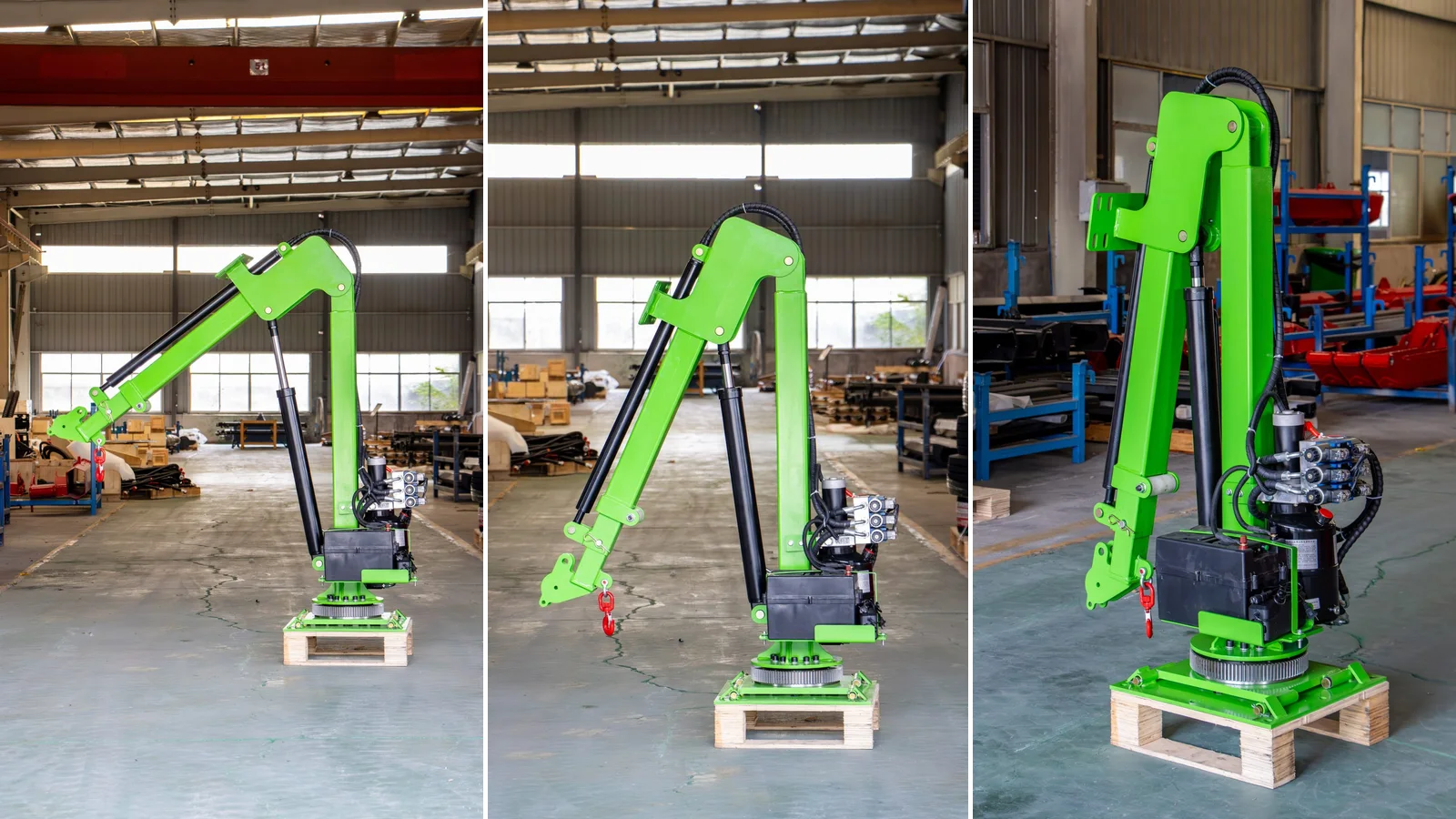

Crane shipping is the packing, loading and sea transport of a crane from the factory to the buyer’s port. It also covers the documents and trade terms that go with it. For a truck mounted, knuckle boom or marine crane bought in China, there are three main ways to ship it: in a standard container, on a flat rack or on a RoRo vessel. The right one depends on the size of the cargo and whether it has wheels.
BOB-LIFT has built truck mounted cranes in Xuzhou, Jiangsu, since 2003. We ship the crane itself: it is wrapped in stretch film and loaded into a container, and most orders leave from Lianyungang, Qingdao or Shanghai. This guide explains how shipping a crane from China works, how to choose the method, how the crane is prepared, which documents you need and what to check when it arrives. If you are still choosing the crane, start with our 7-step guide to buying a truck mounted crane from China.
Key takeaways
- A crane can travel in a standard or open-top container, on a flat rack or on a RoRo ship. Container shipping is the usual choice for a crane shipped on its own.
- BOB-LIFT wraps each crane in stretch film and loads it into a container. The number of cranes per container, the route and the lead time are confirmed with your quotation.
- Inside the container the crane must be blocked and lashed so it cannot move. The CTU Code from IMO, ILO and UNECE is the reference for packing cargo transport units.
- The core documents are the commercial invoice, packing list and bill of lading. Some countries also ask for a certificate of origin, and every packed container needs a verified gross mass under SOLAS.
- Agree the Incoterms rule in writing, and ask your own customs broker to confirm the HS code before the crane ships.
How is a crane shipped from China?
Sea freight carries almost all cranes that leave China for overseas buyers, so the real decision is not which vessel, but which type of cargo transport unit the crane travels in. There are three common options, each with different protection, availability and handling requirements.
Standard container (20 ft, 40 ft or open-top)
A standard container is a closed steel box, and it is the most common way to carry a crane on its own. The crane is folded into its transport position, wrapped, set on its base or a pallet and moved into the container by forklift or hoist. The doors close, and the container is sealed until it reaches your destination port, which gives the best protection against rain, salt spray, contamination and theft. A 20 ft or a 40 ft box is chosen by the size of the crane and how many units ship together. An open-top container has no fixed roof and is covered with a tarpaulin. It is loaded from above, which helps when a crane is too tall to pass through the doors.
Flat rack for oversize cargo
A flat rack is a container floor with strong end walls but no side walls and no roof. It is the general option for cargo that is too wide, too tall or too heavy to fit inside a closed box. The cargo is lashed to the rack and is open to the weather, so it needs good wrapping or a cover. Flat rack space is usually more limited than standard container space, and handling at the port takes more planning. Whether a flat rack is needed for your order is decided with the shipping method and route in your quotation.
RoRo for wheeled cargo
A RoRo ship is a roll-on, roll-off vessel that carries cargo driven or towed on board over a ramp, such as cars, trucks and self-propelled machines. It is the method used when a crane travels already mounted on a vehicle, because the vehicle can drive on and off. RoRo services sail only between certain ports, so the route decides whether it is available. A crane shipped on its own has no wheels and normally goes by container.
Container vs flat rack vs RoRo: which one fits your crane?
This table compares the three methods on the points importers ask about most. It is a qualitative guide; the method for a given order depends on the crane model and the route.
| Point | Standard or open-top container | Flat rack | RoRo |
|---|---|---|---|
| What fits | Cargo that fits inside the box; open-top takes taller cargo loaded from above | Cargo too wide, tall or heavy for a closed box | Cargo on wheels or tracks that can be driven or towed on board |
| Protection | High: closed and sealed (open-top under a tarpaulin) | Low: open to the weather, needs wrapping or a cover | Medium: carried inside the ship’s decks |
| Securing | Blocked and lashed inside the box | Lashed to the rack’s floor and end walls | Lashed to the ship’s deck |
| Typical use for cranes | A crane shipped on its own; can share a box with other cargo | Oversize cranes or large parts | A crane already mounted on a vehicle |
| Availability | Most ports and routes | Fewer units, more port planning | Only routes served by RoRo ships |
To choose, start with three questions: does the crane fit inside a container in its transport position, does the cargo have its own wheels, and which shipping services operate to your destination port? For most cranes shipped individually, the answer is a container. A flat rack is the alternative for oversize cargo, and RoRo is reserved for cargo that rolls.
How is a crane prepared for shipping?
Careful preparation keeps the crane clean, dry and immobilised during a long sea voyage and several handling operations. Our truck mounting and export page shows the packing steps we use. Every crane in an order is tested, set on its base or a pallet and lined up in the hall. It is then wrapped in stretch film and moved into the container by hoist or forklift. Before packing, each crane is mounted on our test bay and run through lifting, slewing and outrigger functions under load, as our quality and testing page shows.
- Stretch-wrap. Film wrapped around the folded crane keeps out dust and rain while it waits at the port.
- Hydraulics. Ask how the hydraulic system ships, and check on arrival that hoses, fittings and any open ports are capped and free of leaks. Confirm with your quotation whether hydraulic oil is included.
- Blocking and lashing. The crane must not slide, tip or bounce in the box. The IMO/ILO/UNECE CTU Code is a non-mandatory global code of practice for packing cargo transport units. It covers loading and securing cargo in containers and gives guidance to those who receive and unpack them.
- Wooden packaging. Pallets, crates and dunnage made of raw wood fall under ISPM 15, the international standard for wood packaging material. It covers dunnage but excludes processed wood such as plywood. Ask that any solid wood used is ISPM 15 compliant.
- Marking. Each package should carry marks that match the packing list, so the receiver can check it quickly.

The short film below shows the same steps: a crane wrapped and marked for export, lifted on the overhead crane hook, then wrapped or wood-crated at the freight forwarder’s warehouse and moved by forklift and flatbed lorry.
From factory to your port, step by step
Every route is a little different, but a container shipment of a crane from China usually runs in this order.
- Quotation and trade term. You send the crane model, your destination port and the Incoterms rule you want. The route, shipping time, freight and the number of cranes per container are confirmed with your quotation.
- Test and final check. The crane is tested on the bay before packing. You can ask for a test video of your own crane with the serial number visible, or send an inspection company of your choice.
- Packing. The crane is folded, wrapped in stretch film and set on its base or a pallet. Loose parts are packed and listed.
- Container loading. A hoist or forklift moves the crane into the container, where it is blocked and lashed. The container is then sealed.
- Weighing. The shipper declares the verified gross mass (VGM) of the packed container before it is loaded on the ship.
- Inland haul and export clearance. The container goes by road to the port of loading, usually Lianyungang, Qingdao or Shanghai, and clears export customs.
- Sea freight. The carrier loads the container and issues the bill of lading. The shipping documents go to you or your bank.
- Arrival and import clearance. Your broker clears the crane through customs with the documents, and the container is released for delivery to your yard.
The VGM step is a legal condition, not a formality. According to the IMO page on SOLAS container weight verification, the shipper must state the verified gross mass in the shipping document and submit it in time for the ship’s stowage plan. The verified gross mass is a condition for loading a packed container onto a ship. It can be found by weighing the packed container, or by weighing all the packages, including pallets, dunnage and securing material, and adding the container’s tare mass.
FOB, CIF or another Incoterms rule: who arranges what?
The Incoterms rule in your contract decides who books the ship, who pays for insurance and where the risk passes from seller to buyer. The US International Trade Administration explains that Incoterms 2020 has 11 rules: seven for any mode of transport and four for sea and inland waterway transport only (FAS, FOB, CFR and CIF). The rules are issued by the International Chamber of Commerce.
- FOB (Free on Board), named port of loading. The seller delivers the crane on board the ship at the port of loading in China and handles export clearance. You or your forwarder book and pay the sea freight and insurance. FOB suits buyers who already have a forwarder they trust.
- CFR (Cost and Freight), named port of destination. The seller also books and pays the sea freight to your port. Risk still passes when the crane is loaded on board in China.
- CIF (Cost, Insurance and Freight). As CFR, plus cargo insurance bought by the seller. The ICC notes that the default cover under CIF is the Institute Cargo Clauses (C), and that the parties can agree a higher level of cover. CIF suits buyers who want one price to their port.
- FCA, CPT and CIP. These are the matching rules for any mode of transport, often used for container cargo. Under CIP the ICC requires a higher level of insurance, in line with the Institute Cargo Clauses (A).
Under all of these rules you handle import clearance, duties and delivery from your port to your yard. Incoterms also leave some things out. They do not set the price, the payment method, when ownership passes, or which documents the seller must provide for import customs. Write those into the sales contract. Tell us which rule you want, and we confirm the route and freight with your quotation.
Which shipping documents do you need?
Customs authorities in your country clear the crane on the basis of its documentation before anyone examines the machine itself. The ITA list of common export documents describes the main ones, and advises asking the buyer or a freight forwarder which documents a shipment needs. These are the ones that matter most for a crane:
| Document | What it does | Who usually issues it | What to check |
|---|---|---|---|
| Commercial invoice | Bill for the goods; one of the main documents customs uses to set duties | Seller | Crane model, quantity, value and Incoterms rule match the contract |
| Packing list | Lists each package, its marks, dimensions and net and gross weight | Seller | Matches the invoice and the marks on the packages |
| Bill of lading | Contract of carriage with the shipping line; an original is usually needed to collect the cargo | Carrier or its agent | Shipper, consignee, ports and container number are correct |
| Certificate of origin | Signed statement of where the goods were made; required by some countries | Usually validated by a body such as a chamber of commerce | Ask your broker if you need one, and in which form |
| Verified gross mass (VGM) | Declared weight of the packed container, required under SOLAS before loading | Shipper named on the bill of lading | Declared before the container is loaded |
| ISPM 15 mark | Shows that solid wood packaging meets the international standard | Marked on the wood itself | Present on any crate, pallet or dunnage of raw wood |
Your market may need more, such as product certificates. Our buying guide covers those in its step on documents. Send your broker the draft documents before the ship sails, because a mistake is far easier to fix in China than at your port.
Customs and the HS code: check with your broker
An HS code is the commodity code from the Harmonized System that every import declaration needs; it is also called a tariff code. The code sets the rate of duty and import tax, and shows whether a licence or a lower trade-agreement rate applies. The UK government’s guide on finding commodity codes notes that only the first six digits are used worldwide. The rest of the code and product decisions are particular to each country.
That is why the code on a Chinese export declaration is a starting point, not the answer. The same guide warns that if you rely on a code from an overseas supplier, you need to check that it is treated the same way in your country. Send your broker the crane’s drawing and description before you order, and ask for the code and the duty in writing. The code must match what actually arrives, including any parts packed with the crane.
What should you check when the crane arrives?
Inspect the cargo immediately at unpacking, before the crane is installed and before its first lift, because damage discovered later is considerably more difficult to claim from the carrier or insurer.
- Seal and container. Check that the seal number matches the bill of lading and that the container shows no holes or water marks. Photograph it before you open the doors.
- Wrapping and lashing. Look for torn film, loose lashings or signs that the crane moved.
- Packing list. Count every package and part against the list, including loose parts and manuals.
- The crane itself. Check paint, booms, cylinders, hoses and fittings for knocks and leaks, and compare the serial number with your documents.
Report any damage to your carrier and insurer at once, with photos. Then fit the crane following our guide to truck mounted crane installation, and run the first check from our truck mounted crane inspection checklist. Before the crane goes to work, read our guide to crane load testing.
Example scenario (an illustration, not a customer record): an importer in West Africa orders one knuckle boom crane on FOB Qingdao terms and uses their own forwarder. We pack and wrap the crane, load it into a container with other cargo and deliver it on board at Qingdao. The forwarder books the ship and the insurance. Before the ship sails, the importer’s broker checks the draft invoice, packing list and HS code. At the port the container is opened, the crane is checked against the packing list and photographed, and a local body builder fits it to the importer’s truck.
Frequently asked questions
How is a crane shipped from China?
Most cranes go by sea. A crane shipped on its own is usually wrapped and loaded into a container. Oversize cargo can go on a flat rack, and cargo on wheels, such as a crane already mounted on a vehicle, can go by RoRo. BOB-LIFT ships the crane itself, wrapped in stretch film, in a container.
How many cranes fit in one container?
It depends on the crane model and the packing. We confirm the number of cranes per container with your quotation.
Do I need to order a full container?
No. We accept single-crane orders. A single crane can share a container with other cargo, and the route and freight are confirmed with your quotation.
If you also import compact site machines, our sister site explains how BOB-LIFT mini skid steers are loaded into a container.
How long does crane shipping from China take?
It depends on the route, the port of loading and the sailing schedule. Tell us your destination port, and we confirm the lead time and shipping time with your quotation.
Is FOB or CIF better for importing a crane?
FOB suits you if you have a forwarder you trust and want to control the freight and insurance. CIF suits you if you want the seller to book the ship and insurance to your port. Under both rules the risk passes when the crane is loaded on board in China, and you handle import clearance and duties.
Which port do BOB-LIFT cranes ship from?
Most orders leave from Lianyungang, Qingdao or Shanghai. The port for your order is confirmed with the route in your quotation.
How we compiled this guide
The packing, loading and port details come from BOB-LIFT’s own export work and our truck mounting and export page. The photo and the film show real cranes being packed and loaded at our Xuzhou factory and at a forwarder’s warehouse. The rules on container packing, container weight, Incoterms, export documents, wood packaging and commodity codes are summarised from the official IMO, ICC, ITA, IPPC and GOV.UK pages linked in the guide, as they stood in November 2026. The guide was reviewed by Achord Chan, Product Operations Director, in November 2026. It does not replace advice from your freight forwarder or customs broker, or the rules of your country.
Plan your crane shipment with us
Tell us the crane you need, your destination port and the Incoterms rule you prefer. We will send a quotation with the drawing and load chart, and confirm the route, the lead time and the number of cranes per container. Every crane carries a 12-month warranty on the whole machine, common spare parts are dispatched within 48 hours, and our service team replies within 12 hours. Browse our knuckle boom truck mounted cranes, or contact us to start.