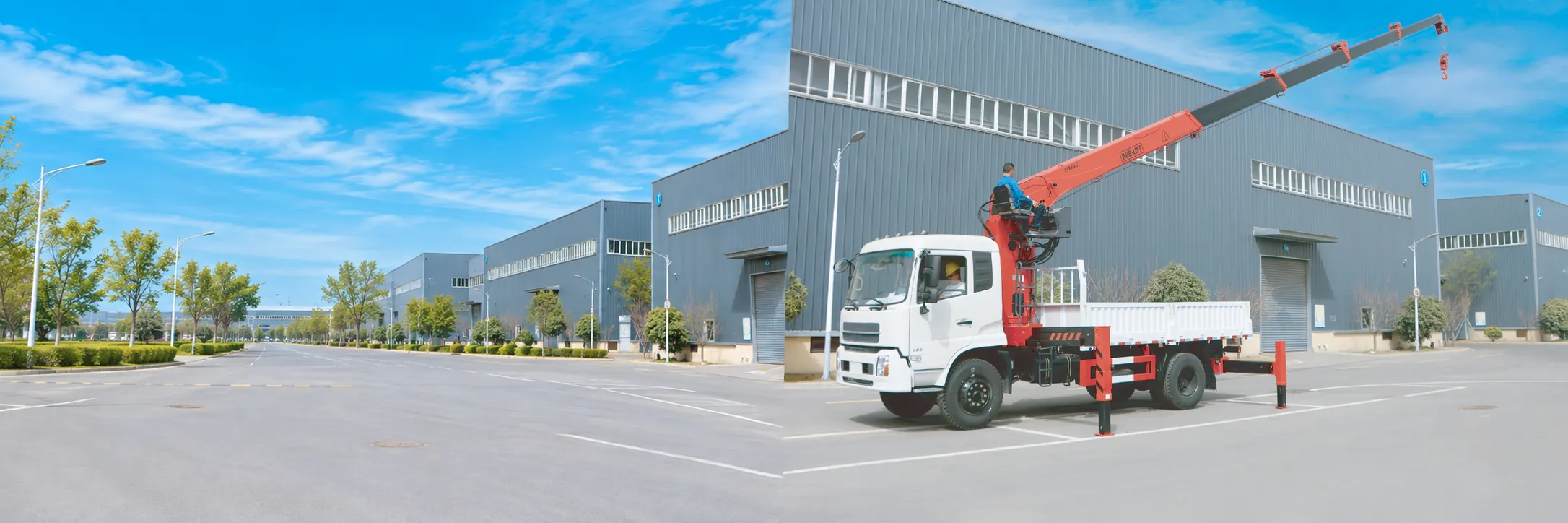

NOM-006-STPS-2023 is the Mexican standard in force for storing and handling materials with machinery, and cranes (grúas) are part of it. It was published in the Diario Oficial de la Federación (DOF), Mexico’s official gazette, on 7 March 2024 and entered into force 180 calendar days later, on 3 September 2024. On that date NOM-006-STPS-2014 stopped having effect. This guide covers only the crane part of the norm, as it applies to a truck mounted knuckle boom crane. For that crane the owner needs eight things. The first three are a review and maintenance programme with records, a check at the start of every shift, and a visible CMU sign. Next come an automatic overload braking device that is never disabled, and operators who are trained and authorised in writing. The last three are the power-line distances of Tabla 1, a load test after any modification, and training refreshed at least every two years. Each point below gives the clause number and the DOF wording.
Key takeaways
- NOM-006-STPS-2023 replaced NOM-006-STPS-2014 on 3 September 2024 (7 March 2024 plus 180 calendar days). If you searched for “NOM-006-STPS-2014”, that version no longer applies.
- A truck mounted crane is “maquinaria” under clause 4.17, which names cranes (grúas) directly, so the norm applies wherever it moves materials at a workplace.
- The crane clauses are 8.4.1 to 8.4.3. They ask for an overload braking device that is never deactivated, a CMU sign in kg or tonnes, outriggers set per the manufacturer and a load test after any modification.
- The programme, the procedures, the reviews and the load test all point back to the manufacturer’s manual. Ask for the manual, load chart and maintenance recommendations before the crane arrives.
- Operators need training with theory, practice and an evaluation, the employer’s authorisation, and a refresh at least every two years. An inspection unit dictamen is optional and valid for one year.
NOM-006-STPS-2014 or 2023: which version applies?
The 2023 version applies. Transitorio PRIMERO of NOM-006-STPS-2023 says: “La presente Norma Oficial Mexicana entrará en vigor a los 180 días naturales, posteriores a su publicación en el Diario Oficial de la Federación” (the norm enters into force 180 calendar days after its publication in the DOF) [1]. Counting 180 days from 7 March 2024 gives 3 September 2024. Transitorio SEGUNDO then says that from that date “quedará sin efectos la Norma Oficial Mexicana NOM-006-STPS-2014” (NOM-006-STPS-2014 ceases to have effect). Transitorio TERCERO let employers follow either version during the 180 days.
Many people still search for “NOM-006-STPS-2014”, and older training material still quotes its clause numbers. When you read a checklist or a course handout, look at which version it cites. A 2014 clause number such as 7.8.4 points to the crane section that is now chapter 8.4.

What changed for cranes between 2014 and 2023
We compared the crane sections of the two DOF texts line by line [2]. Most crane requirements carried over with the same wording. The differences we found are these:
- Scope. The 2014 objective covered handling “mediante el uso de maquinaria o de manera manual” (with machinery or by hand). The 2023 objective covers handling “mediante el uso de maquinaria” only, and the chapter on manual handling is gone.
- Numbering. The crane section moved from 7.8.4 to 8.4.
- A new operating rule. 2023 adds 8.4.2 k): “Mantener el operador, en todo momento, a la vista la carga suspendida” (the operator keeps the suspended load in view at all times). The 2014 items after it moved down one letter.
- The cab seat belt. The 2014 cab item asked for a seat with “cinturón de seguridad”; the 2023 item asks for “cinturón de seguridad retráctil” (a retractable seat belt).
- Third-party checks. The 2014 text spoke of verification units (unidades de verificación); the 2023 text speaks of inspection units (unidades de inspección).
The power-line distances in Tabla 1 are the same in both versions.
Does NOM-006-STPS-2023 apply to a truck mounted crane?
Yes. Clause 2 says the norm “aplica en todos los centros de trabajo donde se realicen actividades de almacenamiento y manejo de materiales mediante el uso de maquinaria” (applies in all workplaces where materials are stored and handled with machinery). Clause 4.14 defines a crane (grúa) as “La máquina diseñada para elevar, descender y/o mover lateralmente cargas suspendidas, a través de un elemento de sujeción” (a machine designed to raise, lower and/or move suspended loads sideways through a holding element). A knuckle boom truck mounted crane, the grúa articulada on a truck, does exactly that. Clause 4.17 removes any doubt: for this norm, “quedan incluidos como tales los polipastos, malacates, montacargas, grúas, transportadores, cargadores frontales o una combinación de éstos” (hoists, winches, forklifts, cranes, conveyors, front loaders or a combination of them count as machinery).
Two more definitions matter for crane owners. CMU (carga máxima de utilización) is, in clause 4.8, “La capacidad de carga especificada por el fabricante que una maquinaria es capaz de soportar, en kilogramos o toneladas” (the load capacity the manufacturer specifies, in kilograms or tonnes). It is close to what English-language rules call the safe working load; our safe working load guide explains that term. The ayudante (clause 4.5) is the helper who assists the operator by signals or other means, the role other rules call the signal person.
The obligations fall on the employer (patrón). Clause 5.1 asks for a specific programme for review and maintenance, 5.9 for training under chapter 10, and 5.10 for records of the review and maintenance. Workers have duties too: clause 6.5 says each worker operates only the machinery for which they are trained and have the employer’s authorisation.
The maintenance programme and installation rules (chapter 7)
Clause 7.1 asks for a review and maintenance programme with a record of its execution. The programme states six things: a) the machinery and its identification number, b) the activity, c) how often it is done, d) the type of review or maintenance, e) the dates, and f) who is responsible. It must follow “las recomendaciones que al respecto señale el fabricante” (the manufacturer’s recommendations) and the crane’s operating conditions and environment. Clause 7.2 adds that the installation, operation and maintenance procedures are written from the manuals, instructions or recommendations of the manufacturer or supplier.
Clause 7.3 covers installation. Item a) asks the procedure to consider the stability, anchoring and strength of the floor or ground where the machine will stand. For a truck mounted crane that means the ground under each outrigger; our guide to outriggers and ground bearing pressure shows how to check it. Item c) lists the manufacturer’s measures for assembly, fixing, energy supply, marking off the work area, grounding, safe operator access and communication between the operator and the workers.
Tabla 1: minimum distances to energised power lines
Clause 7.3 b) asks for minimum safety distances from buildings, structures, other machinery and energised power lines. For power lines, Tabla 1 sets the distance by the phase-to-phase voltage of the line, from 3.04 m for 50 kV or less up to 13.72 m for lines over 750 kV up to 1,000 kV. They are the same distances as the US OSHA Table A clearances of 10 to 45 ft, converted to metres (Tabla 1 gives 3.04 m for 10 ft) [3]. Our crane power line safety guide covers the OSHA side and how to plan a lift near lines. In Mexico, use the Tabla 1 values.

Clause 7.4 sets what the operating procedures must consider. Item h) covers signal codes between operator and helper. Item i) sets criteria to stop work for damage, rain, strong wind, poor light or earthquakes. Item k) covers “Las autorizaciones del patrón que deberán obtener los operadores de grúas” (the employer’s authorisations that crane operators must obtain). Clause 7.5 covers maintenance procedures, including lockout with tags and padlocks under NOM-004-STPS-1999 and the maintenance manual the manufacturer provides.
General measures for every machine (clause 8.1)
Clause 8.1 applies to all machinery, cranes included. The items a crane owner meets every day are these:
- 8.1 a): “Realizar al inicio de cada jornada una revisión visual y prueba funcional de la maquinaria” (carry out a visual check and function test of the machinery at the start of each shift). The check covers the operating and emergency controls, safety devices, pneumatic, hydraulic, electrical and combustion systems, warning signals, the general structure, and anything else the manufacturer specifies.
- 8.1 b): emergency stop devices and notices of the maximum load capacity.
- 8.1 c): at least one fire extinguisher suited to the class of fire, under NOM-002-STPS-2010.
- 8.1 d): keep people who are not part of the work out of the operating area.
- 8.1 j): a review by trained staff when abnormal conditions are found, after a part under stress is replaced or repaired, and at the frequency the manufacturer indicates.
- 8.1 l) and m): never exceed the CMU, and never leave a suspended load unattended.
- 8.1 n): “Prohibir que los trabajadores empleen la maquinaria destinada para el manejo de materiales como medio de transporte de personal” (workers must not use material-handling machinery to transport people).
- 8.1 o): no installation, operation or maintenance work by people under 18 or pregnant women.
Clause 8.1 n) matters if you plan to fit a work basket. A man basket is a separately charged option on our cranes. The norm text does not discuss personnel baskets, so ask the labour authority or an inspection unit how 8.1 n) applies to your use before you order one.
The crane clauses: 8.4.1 to 8.4.3
8.4.1 Requirements for the crane
Cab, 8.4.1 a). The first item lists cab requirements. The cab needs good visibility and ventilation, shatterproof glass, a working wiper when the crane works outdoors, and a ladder or other safe access. It also needs a comfortable seat with a retractable seat belt, enough room to work the controls, and protected levers. These items describe a crane with an operator cab. Many truck mounted cranes have no cab: they are worked from control levers at the base, from a high seat or by radio remote control. The norm text does not discuss that case, so ask your inspection unit how 8.4.1 a) applies to your crane.
Overload braking, 8.4.1 b). The crane must “Contar con dispositivos de frenado automático, cuando el peso máximo sea superado, los cuales no deberán ser desactivados” (have automatic braking devices that act when the maximum weight is exceeded, and these must not be deactivated). On a hydraulic loader crane, the device built for this job is the load moment limiter; our load moment indicator guide explains how one works. Every BOB-LIFT crane is listed with a load moment limiter. Whatever crane you buy, ask the supplier in writing which device on it meets 8.4.1 b), and never bypass it.
Ballast and counterweights, 8.4.1 c). The crane must have ballast or counterweights suited to its loads and the manufacturer’s specifications. The SQ10ZA5 drawing shows no counterweight; that crane stands on its own outriggers, which spread from 2,310 to 5,610 mm. If your crane has no counterweight, record that in the procedure and follow the manufacturer’s outrigger instructions instead.
8.4.2 Operating the crane
| Clause | What it asks | On a truck mounted crane |
|---|---|---|
| 8.4.2 a) | Operated only by staff who are trained and authorised by the employer | Keep the written authorisation; an inspection asks for documents (Tabla 2) |
| 8.4.2 b) | Operator wears the seat belt | Applies where the crane has a seat |
| 8.4.2 c) | Visible CMU sign, in kg if 1,000 kg or less, in tonnes if more | Place it where the operator and the crew can both see it |
| 8.4.2 d) to f) | Signal code or communication system; helper placed with full view; no movement until the signal is understood | See our crane hand signals guide |
| 8.4.2 g) | Tyres checked at the start of each shift | The truck’s tyres, where they apply |
| 8.4.2 h), i) | Outriggers used on mobile cranes per the manufacturer, and in safe condition | Set all outriggers as the load chart requires |
| 8.4.2 j), k) | Load secured before lifting; operator keeps the load in view | A remote control lets the operator walk to a point with a clear view |
| 8.4.2 l) | Rules for moving a mobile crane with a suspended load | Only if the crane manual allows travelling with a load at all |
| 8.4.2 m) | Loads above people’s height, and as far as possible never over workers or vehicles | Plan the slewing path before the lift |
| 8.4.2 o) | Consider overloads from rain or wind | See our wind speed limits guide |
| 8.4.2 p), q) | Main switch off and locked after work; nobody climbs on or off a moving crane | Ask the supplier which switch isolates your crane |
Clause 8.4.2 c) sets the units of the CMU sign. It must state “la carga máxima de utilización, en kg si es de 1 000 kg o menos, y en toneladas si es mayor” (the CMU in kg if it is 1,000 kg or less, and in tonnes if it is more). A knuckle boom crane has no single capacity: its rated load falls as the radius grows. The norm text does not say how to sign a capacity that changes with radius. Our suggestion is to show the maximum CMU with its radius and to keep the load chart at the control station; confirm the format with your inspection unit. Our guide on how to read a crane load chart shows how the values change.
8.4.3 Review, maintenance and load tests
Item a) asks for a general switch that cuts the crane’s electrical supply during review and maintenance, where it applies, under the lockout procedure of NOM-004-STPS-1999. Item b) is the one that matters when a crane is fitted or changed. It reads: “Someter las grúas a las pruebas de carga correspondientes que indique el fabricante, después de que sea modificada su estructura, accesorios, mecanismos, contrapesos, elementos de estabilización o cualquiera otra parte que altere las condiciones de funcionamiento y antes de volver a operarla” (put cranes through the load tests the manufacturer indicates after their structure, accessories, mechanisms, counterweights, stabilising elements or any other part that changes how they work has been modified, and before operating them again). Fitting a crane to a truck, moving it to another truck or changing its outriggers alters its stabilising elements, so treat each of these as a modification under 8.4.3 b) unless your inspection unit says otherwise. Ask the manufacturer which test applies, and have it done before the crane goes back to work. Our crane load test guide explains how such tests are run.
Slings and electromagnets (8.3 and 8.6)
Clause 8.3 covers slings. Use only slings marked or tagged with their capacity, and check that the capacity is greater than the load (8.3.1 a). Never knot a sling or use a damaged one, and keep textile slings within -40 °C to 100 °C (8.3.1 i). Review them periodically as their maker instructs, tag them with the validity of the review, and retire any with signs of breakage, fatigue or deformation (8.3.2). Our crane rigging slings guide covers sling types and angles. If you hang an electromagnet from the crane, clause 8.6.1 a) asks for an auxiliary power source that switches in automatically if the main supply fails. That source holds the load until it can be lowered safely. Our lifting magnet guide explains magnet types.
Training and operator authorisation (chapter 10)
NOM-006-STPS-2023 does not create a government crane licence. It places training and authorisation on the employer. Clause 10.1 asks for an induction course for new workers. Clause 10.3 says training for installers, maintenance staff, operators and their helpers consists of theory, practical training and an evaluation. It covers, as applicable:
- a) how the machine works;
- b) safety procedures, and the crane’s controls, systems and safety devices;
- c) its capacities and limits, and the conditions that create risk;
- d) the safety measures of this norm;
- e) routine checks before each shift, and periodic checks per the manufacturer;
- f) weather that forces work to stop;
- g) the emergency procedure.
Clause 10.4 says training “deberán reforzarse por lo menos cada dos años, o antes cuando se introduzca nueva maquinaria o equipo” (must be refreshed at least every two years, or sooner when new machinery or equipment is introduced). A new crane therefore triggers training on that crane. Clause 10.5 asks for a training record with each worker’s name and post, the date, the topics, and the instructor’s name and, where applicable, the instructor’s registration number as an agente capacitador with the STPS.
Apéndice I gives a crane-operator training guide based on ISO 9926-1:1990. The appendix says its content “no es de cumplimiento obligatorio” (is not mandatory), so treat it as guidance. For the US approach, where operators are certified, see our crane operator license guide.
Inspection units, the dictamen and records (chapters 11 to 13)
An inspection unit (unidad de inspección) is an accredited and approved body that verifies compliance with the norm. Clause 11.1 says “El patrón tendrá la opción de contratar una unidad de inspección acreditada y aprobada” (the employer has the option to contract an accredited and approved inspection unit) to verify compliance. A dictamen is the report the unit issues after that verification; clause 11.3 lists what it contains. Clause 11.4 says “La vigencia de los dictámenes emitidos por las unidades de inspección será de un año” (dictámenes issued by inspection units are valid for one year), provided the conditions they were based on do not change. Clause 12.2 asks for the current dictamen to be available to the labour authority on request. Clause 12.5 allows records on paper or electronically, and says they “se deberán conservar al menos durante un año” (must be kept for at least one year).
Tabla 2 in chapter 12 shows how compliance is checked: by walking the site, reviewing documents and records, or interviewing workers. It rates the risk of the crane items in 8.4 and the authorisation in 8.4.2 a) as “Grave” (serious). Under chapter 13, surveillance of compliance belongs to the Secretaría del Trabajo y Previsión Social (STPS).

What to ask your crane supplier for
Clauses 7.1, 7.2, 7.5 f), 8.1 j) and 8.4.3 b) all refer back to the manufacturer. Before the crane ships, ask for:
- The operation and maintenance manual, with the maintenance items and intervals that 7.1 and 8.1 j) 3) refer to. Our manuals are in English by default; another language, such as Spanish, can be supplied if you ask for it in advance.
- The load chart and dimension drawing for the exact model, so you can write the CMU sign (8.4.2 c) and set the outriggers (8.4.2 h).
- The serial or identification number for the programme sheet (7.1 a).
- The overload device: a written statement of which device on the crane brakes it automatically when the maximum weight is exceeded (8.4.1 b).
- The load test the manufacturer specifies after fitting or modification (8.4.3 b).
- The daily check items the manufacturer adds to 8.1 a) 6).
Our 10 t knuckle boom series holds a CE certificate under the EU Machinery Directive 2006/42/EC [4], and the certificate names EN ISO 12100:2010 and EN 12999:2020+A1:2025. NOM-006-STPS-2023 does not refer to CE marking, so treat the certificate as evidence about the design, not as a step of the Mexican norm. Our truck mounted crane inspection checklist is a useful base for the daily and periodic checks.
Fitting the crane and putting it to work in Mexico
We supply the crane, not the truck. If you buy the truck in Mexico, we ship the crane only, a local body builder fits it, and our engineers support the fitting remotely. A truck bought in China can be brought to our factory and the crane fitted there before shipping. Either way, the fitted crane needs the load test the manufacturer indicates (8.4.3 b) before it works, and that test is done locally. Our truck mounted crane installation guide covers the fitting steps. After fitting, set up the programme, the procedures, the CMU sign and the operator training before the first lift.
For a real order, see how a customer from Mexico ordered four BOB-LIFT truck-mounted cranes at bauma CHINA 2026: one 40 t, two 25 t and one 10 t, for his own operations in Mexico.
Our support terms are a 12-month warranty on the whole machine, common spare parts dispatched within 48 hours, and a reply from our service team within 12 hours, with video guidance. A customer in Mexico already uses one of our 10 t knuckle boom cranes to load a compactor roller onto its own truck.
Example scenario: a 10 t knuckle boom crane in Monterrey
Example scenario (an illustration, not a customer record). A building-materials distributor in Monterrey (ASSUMED) buys one SQ10ZA5 knuckle boom crane for a truck it already owns. The SQ10ZA5 drawing gives a maximum lifting capacity of 10,000 kg, a lifting moment of 21 t·m and a crane self weight of 3,550 kg. Its load chart reads 10,000 kg at 2.0 m, 4,650 kg at 4.51 m, 3,080 kg at 6.49 m, 2,280 kg at 8.51 m, 1,800 kg at 10.56 m and 1,480 kg at the full 12.63 m.
The CMU sign. The maximum CMU is over 1,000 kg, so clause 8.4.2 c) asks for tonnes: “CMU 10 t”. Following our suggestion above, the sign reads “CMU 10 t at 2.0 m” and a copy of the load chart hangs at the control station, so the crew can see that only 1,480 kg is allowed at full reach.
The 7.1 programme sheet. The distributor writes one sheet for the crane. Item a) is “SQ10ZA5, serial number from the identification plate”. Item e), the dates, is filled in as each task is done. Intervals marked “per manual” come from the crane manual; the norm itself sets none.
| Activity (7.1 b) | Periodicity (7.1 c) | Type of review or maintenance (7.1 d) | Responsible (7.1 f) |
|---|---|---|---|
| Visual check and function test (8.1 a) | Start of each shift | Review | Operator (ASSUMED) |
| Hydraulic oil level, hoses and fittings | Per manual | Review; hoses replaced if damaged | Maintenance technician (ASSUMED) |
| Lubrication of slewing system, pins and boom sections | Per manual | Preventive maintenance | Maintenance technician (ASSUMED) |
| Slings: review and tag (8.3.2) | As the sling maker instructs | Review; damaged slings retired | Yard supervisor (ASSUMED) |
| Review after an abnormal condition or a stressed part is replaced (8.1 j) | When it happens | Review by trained staff | Maintenance technician (ASSUMED) |
| Load test after fitting or modification (8.4.3 b) | When it happens, before work | Load test indicated by the manufacturer | Employer, through a local test provider (ASSUMED) |
The 8.1 a) start-of-shift check. The operator works through the six groups of the clause for this crane:
- The control levers or remote control respond and return to neutral, and the emergency stop stops the crane.
- The load moment limiter works as the manual describes.
- No hydraulic leaks or chafed hoses, oil level in range, wiring intact.
- Warning signals work.
- No visible cracks or deformation on booms, pins, column, outriggers or mounting.
- Any item the manual adds.
The result goes into the record that 5.10 and 12.5 ask for, and is kept for at least one year.
Training and the first year. Because the crane is new machinery, clause 10.4 asks for training on it before use. The operators get theory, practice and an evaluation, a written authorisation (7.4 k, 8.4.2 a) and a training record (10.5). Their next refresh is due within two years. If the distributor contracts an inspection unit, the dictamen is valid for one year (11.4).
Frequently asked questions
Is NOM-006-STPS-2014 still valid?
No. NOM-006-STPS-2023 entered into force on 3 September 2024, 180 calendar days after its DOF publication on 7 March 2024. From that date, Transitorio SEGUNDO says the 2014 version ceased to have effect.
Does NOM-006-STPS-2023 apply to truck mounted cranes?
Yes. Clause 4.17 names cranes as machinery for the purposes of the norm, and clause 2 applies it to every workplace in Mexico where materials are stored or handled with machinery. The crane-specific rules are in clauses 8.4.1 to 8.4.3.
Does the norm require a crane operator licence?
The norm itself sets no government licence. It requires the employer to train operators with theory, practice and an evaluation (10.3), to authorise them (7.4 k, 8.4.2 a), to refresh training at least every two years (10.4) and to keep a training record (10.5).
How often must a crane be checked under NOM-006-STPS-2023?
At the start of every shift (8.1 a), at the frequency the manufacturer indicates (7.1 and 8.1 j), after abnormal conditions or the replacement of a stressed part (8.1 j), and with a load test after any modification (8.4.3 b). An optional inspection unit dictamen is valid for one year (11.4).
What is the minimum distance from power lines in Mexico?
Tabla 1 of clause 7.3 b) sets 3.04 m for lines of 50 kV or less, rising to 4.57 m, 6.10 m, 7.62 m and 10.67 m, and 13.72 m for lines over 750 kV up to 1,000 kV.
How we compiled this guide
All quotes come from the DOF texts of NOM-006-STPS-2023 (7 March 2024) and NOM-006-STPS-2014 (11 September 2014), read in November 2026. The OSHA comparison uses 29 CFR 1926.1408 Table A on eCFR, and the CE reference uses Directive 2006/42/EC on EUR-Lex. Spanish wording is copied from the DOF and followed by our English gloss. The 2014 to 2023 differences come from our own comparison of the two crane sections. The crane figures come from the BOB-LIFT SQ10ZA5 dimension drawing and load chart; the CE statement comes from our 10 t knuckle boom product page and certificate. The example uses a clearly marked assumed company. Achord Chan, Product Operations Director, carried out the editorial review. For the South African rules, see our sister guide to the Driven Machinery Regulations for truck mounted cranes.
This guide summarises the published text; check the current version and your inspector’s interpretation before you rely on it.
Get the documents your NOM-006 programme needs
Tell us the heaviest load and its radius, your truck, and the language you need for the manual. We will recommend a model from our knuckle boom truck mounted crane range and send its load chart and dimension drawing with the quotation. You can also browse the full truck mounted crane range or contact us directly.