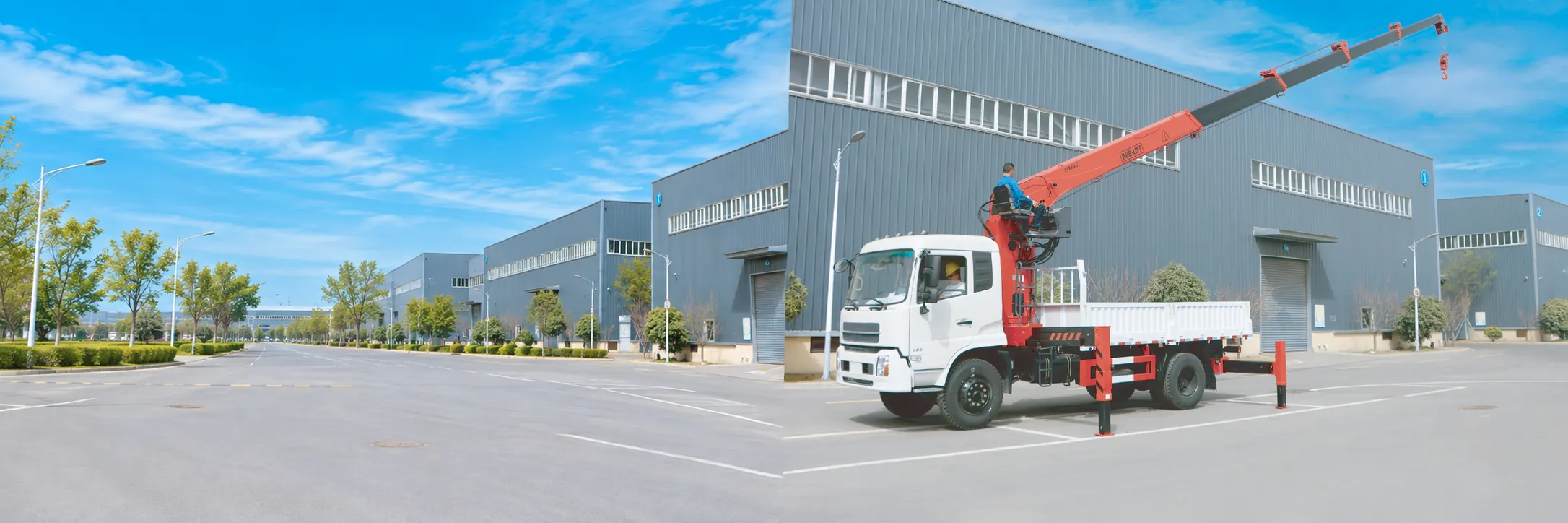

DMR 18 is regulation 18 of South Africa’s Driven Machinery Regulations, 2015, the part that covers lifting machines. A truck mounted (loader) crane is a lifting machine under it, and most of its duties fall on the user. The crane must be built to a recognised standard, marked with its safe working load and fitted with an identification plate, brakes and load safety devices. A Lifting Machinery Inspector must examine and performance-test it before first use and then at least every 12 months. A competent person checks ropes, hooks and safety devices every six months and the slings every three months, and every result goes into a register. The rules also cover man-cages for lifting people and the operator’s certificate of training. This guide reads each clause as it applies to a knuckle boom or telescopic truck mounted crane, then lists what to ask your supplier for before you import one.
Key takeaways
- The Driven Machinery Regulations, 2015 (Government Notice R.527) took effect on 30 September 2015. Regulation 18 applies to every power-driven lifting machine, so it covers truck mounted cranes.
- Before first use, after every dismantling and re-erection, and then at intervals not exceeding 12 months, a Lifting Machinery Inspector of a registered Lifting Machinery Entity must examine and performance-test the crane.
- A competent person examines ropes, hooks, sheaves, brakes and safety devices at least every six months, and the lifting tackle at least every three months. All results go into a register kept on the premises.
- A crane with a lifting capacity greater than 5 000 kg needs a load indicator that shows the operator the mass being lifted. The 2017 guidelines say a load-limiting device is intended for every power-driven lifting machine.
- The operator needs a certificate of training from an accredited provider. Truck mounted cranes are code C32 in the 2024 National Code of Practice.
- The crane supplier provides the documents. The examination, the performance test and operator training are done in South Africa by registered inspectors and accredited providers.
What the Driven Machinery Regulations are
The Driven Machinery Regulations, 2015 were published by the Department of Labour as Government Notice R.527 in Government Gazette 38887 on 19 June 2015. The Minister made them “under section 43 of the Occupational Health and Safety Act, 1993 (Act No. 85 of 1993)”. Regulation 24 says they “come into effect on 30 September 2015” [1]. Regulation 23 repealed the Driven Machinery Regulations of 1988. They cover all driven machinery, for example saws, presses and transportation plant. Regulation 18, “Lifting machines, hand-powered lifting devices and lifting tackle”, is the one that matters for crane owners. Why it matters: under regulation 22, a person who fails to comply with regulation 18 is “guilty of an offence and liable upon conviction to a fine or to imprisonment for a maximum of 12 months”.
Regulation 1 defines a lifting machine as “a power-driven machine that is designed and constructed for the purpose of raising or lowering a load or moving it in suspension, but does not include an elevator, escalator or hand-powered lifting device”. A hydraulic knuckle boom or telescopic crane on a truck fits that definition.
In 2017 the Department published Guidelines for Driven Machinery Regulations, 2015 (Government Notice R.288, Gazette 40734, 31 March 2017). They add explanatory notes under each clause [2]. The foreword says the notes are meant “to help and guide suppliers, contractors, service providers”, competent persons and users. This guide quotes both.
LMI in DMR 18 means Lifting Machinery Inspector
In the DMR, LMI stands for Lifting Machinery Inspector. A Lifting Machinery Inspector (LMI) is a person, not the load moment indicator, the overload device that other BOB-LIFT articles call an LMI (see our load moment indicator guide for the device). Regulation 1 defines a lifting machinery inspector as “a person who is employed by a Lifting Machinery Entity and who is registered by the Engineering Council of South Africa in terms of the Engineering Profession Act, 2000 (Act No. 46 of 2000)”. The 2017 guideline note adds: “These are commonly known as LMI and are registered at ECSA on behalf of Department of Labour.”
The inspector’s employer matters too. A Lifting Machinery Entity (LME) is “a legal entity approved and registered by the chief inspector in terms of regulation 19”. Regulation 19(4) says an approved LME “shall on request produce a certificate of registration” to any person to whom it intends to render an examination or performance test. So ask to see it before you book the first examination.
| Term in regulation 1 | Definition (quoted) |
|---|---|
| Lifting tackle | “chain slings, wire rope slings, woven webbing slings, master links, hooks, shackles and swivels, eye bolts, lifting or spreader beams, tongs, ladles, coil lifters, plate lifting clamps and drum lifting clamps used to attach a load to a lifting machine” |
| Competent person | “a person who has the knowledge, training, experience and qualifications specific to the work performed” |
| Safe working load | “the mass load applicable to a piece of equipment or system as determined by a competent person taking into account the environment and operating conditions” |
| Thorough examination | “examination or inspection to determine whether the equipment is safe to use” |
| Load path | “all the parts of the lifting machine under stress during the lifting operation” |
| Man-cage | “a platform enclosed on all sides, whether closed or open at the top, designed for the purpose of raising and lowering persons by means of a lifting machine, but does not include mobile elevated work platforms and suspended access platforms” |
DMR 18 clause by clause for a truck mounted crane
Most duties in regulation 18 are placed on the user of the crane; 18(7)(c) adds a record duty for the owner and the lessor of leased equipment. The supplier, body builder, inspector and training provider each help the user meet them. The quotes below come from the gazette text [1]; the notes come from the 2017 guidelines [2].
18(1): standard, safe working load, identification plate and winch rope
Regulation 18(1) lists four conditions. Under (a), the crane must have “been designed and constructed in accordance with a generally accepted technical standard”. Under (b), it must be “conspicuously and clearly marked with the safe working load”. On a truck mounted crane the rated load falls as the radius grows. In that case “a table showing the safe working load with regard to every variable condition shall be posted by the user in a conspicuous place easily visible to the operator”. In practice, that table is the crane’s load chart, posted where the operator stands. Our guides to crane safe working load and how to read a crane load chart explain both terms.
Under 18(1)(c), “the manufacturer’s identification plate displaying the name of the manufacturer, the design standard, the serial or reference number and the country of origin” must be affixed to the machine. Paragraph (d) applies only to cranes with a winch. It requires “at least three full turns of rope on the drum of each winch” when the winch “has been run to its lowest limit”, controlled “by an automatic cut-out device”. In BOB-LIFT model codes the letter J marks a winch version, so this applies to an SQ10ZA5J but not to an SQ10ZA5. Our crane winch guide covers the winch itself.
18(2) to 18(4): brakes, rope safety factors and hooks
Regulation 18(2) requires “a brake or other device capable of holding the safe working load”. It must hold if the power supply fails, if the hook reaches its highest or lowest safe position, or if the load is greater than the rated load. Regulation 18(3) sets the factor of safety for chains and ropes in the load path at the value “prescribed by the standard to which that machine was manufactured”. Only when the standard gives none do the defaults apply: “chains, steel-wire ropes and fibre ropes shall have a factor of safety of at least four, five and 10, respectively”. On a knuckle boom crane without a winch there is often no rope in the load path at all. Where a winch is fitted, our crane wire rope guide covers inspection and replacement.
Regulation 18(4) requires every hook or load-attaching device to be “so designed or proportioned that accidental disconnection of the load under working conditions cannot take place”. According to the guideline note, a latch is “not prescribed where the design is of such a nature that accidental disconnection cannot take place”. The same note says the user must state “clearly what the purpose of the machine will be when purchasing the machine”. So tell your supplier what you will lift. Hook types and latches are covered in our crane hook guide.
18(5): thorough examination and performance test by an LMI
Regulation 18(5)(a) is the core of DMR 18. It covers “the entire installation and all working parts” of the crane, with ancillary equipment but not lifting tackle. These get “a thorough examination and a performance test, as prescribed by the standard to which the lifting machine was manufactured, by a lifting machinery inspector of a lifting machinery entity”. The timing is “before they are put into use and every time they are dismantled and re-erected, and thereafter at intervals not exceeding 12 months”.
The test load in the same paragraph is only a fallback. It applies “in the absence of a manufacturing standard or a standard incorporated under section 44(1) of the Act”. Then “the whole installation of the lifting machine shall be tested with 110% of the safe working load applied over the complete lifting range of such machine” [1].
Paragraph (b) requires the inspector to “have knowledge of the erection, load-testing and maintenance of the type of lifting machine or similar machinery involved”. Paragraph (c) gives one exception. It excludes “mobile cranes, self-erecting cranes and mobile elevated work platforms” from “the performance test after each re-deployment within the 12-month period”. However, the regulations do not define “mobile crane”, so ask your Lifting Machinery Entity in writing whether it treats your truck mounted crane as one. The general steps of a load test are in our crane load test guide.
18(6) and 18(7): six-monthly examination and the register
Between the inspector’s visits, regulation 18(6) adds a second check. It covers “all ropes, chains, hooks or other attaching devices, sheaves, brakes and safety devices forming an integral part of a lifting machine”. They need a thorough examination “by a competent person at intervals not exceeding six months”. The guideline note says “The user is free to use an in house competent person or an LME” for this examination. Our truck mounted crane inspection checklist lists what to look at on a loader crane.
Regulation 18(7)(a) requires a register kept on the premises. It records “full particulars of any performance test and examination referred to in subregulations (5) and (6) and any modification or repair”. An inspector can ask to see it. A user of a leased crane must keep “the latest applicable performance test and service records not older than 12 months” (18(7)(b)). “The owner and the lessor of leased equipment shall keep and maintain full service history records on their premises for at least 10 years” (18(7)(c)).
18(8): man-cages for lifting people
Regulation 18(8) controls lifting people. Nobody may be moved or supported by a lifting machine “unless that machine is fitted with a man-cage designed and manufactured according to an approved SANS standard approved for that purpose by an inspector and after a risk assessment has been done”. The guideline notes add that “The intention is to limit the use of a man-cage as far as possible”. Purpose-built machines, such as a cherry picker, come first, and crane use with a man-cage must be approved for a specific site. A work basket for BOB-LIFT knuckle boom cranes is a separately charged option; our crane man basket guide covers how baskets are used.
18(9): load indicator and load-limiting device
Regulation 18(9) sets two devices, joined by “and/or”. Paragraph (a) applies “in the case of a power-driven lifting machine with a lifting capacity of greater than 5 000 kg”. It requires “a load indicator capable of indicating to the operator of the machine the mass of the load being lifted”. Paragraph (b) requires “a load-limiting device that will automatically arrest the driving effort whenever the load being lifted is greater than the safe working load of the power-driven lifting machine at that particular radius”. The load indicator must not need manual adjustment from the moment the load is applied until it is released. The load-limiting device “shall not arrest the driving effort when the power-driven lifting machine is being operated into a safer position”. Finally, machines “manufactured or refurbished prior to the commencement of these Regulations shall be deemed to comply”.
The guideline notes read the clause more strictly. Note (a) says “This requirement only applies to a power driven lifting machine with a capacity of 5000kg and greater”. Note (b) says “The intent is that a Load limiting device is compulsory for all power driven lifting machine”. Note (c) limits it to machines “manufactured or refurbished after the 30 September 2015”. The regulation says “greater than 5 000 kg” but the note says “5000kg and greater”. For a crane rated at exactly 5 000 kg, ask the inspector which reading applies. BOB-LIFT offers a load moment limiter as an option. For a crane rated above 5 000 kg, also ask the supplier in writing how the crane shows the operator the mass of the load. Keep the answer with your purchase records. How overload devices work is explained in our load moment indicator guide.
18(10): lifting tackle every three months
Lifting tackle is the gear that attaches the load to the crane, such as slings, shackles, spreader beams and clamps. Regulation 18(10) requires each item to be well constructed to “a generally accepted technical standard”, and each lifting assembly to be marked “with traceable identification particulars and the safe working load”. Damaged items must be discarded “as per manufacturer’s specification”. Every item must be “examined at intervals not exceeding three months by a competent person, appointed by the user in writing for this purpose”. That person “shall record and sign results of such examination”. The guideline note accepts tackle “marked with a Working Load limit”. Paragraph (c) sets minimum factors of safety, shown in the chart below. Choosing and using slings is covered in our guides to crane rigging slings and rigging shackles.

18(11): the operator’s certificate and code C32
Regulation 18(11) requires every lifting machine to be “operated by an operator specifically trained for that particular type of lifting machine”. Some machines are listed in the National Code of Practice for Training Providers of Lifting Machine Operators. Their operators must hold “a certificate of training, issued by a training provider accredited by the Transport Seta approved for the purpose by the chief inspector”.
The code changed in 2024. On 6 December 2024 the Chief Inspector withdrew the earlier code (Government Notice R539, Gazette 38904). In its place, the National Code of Practice for the Training Providers of Lifting Machine Operators, 2024 was incorporated into the DMR (Government Notice 5526, Gazette 51711) [3]. Training providers are exempted “on a condition that they are accredited by Quality Council for Trade Occupations (QCTO) or Transport Seta (TETA) until end of June 2027”. After that date, “all training providers shall be accredited by QCTO”.
In Appendix 1 of the 2024 code, a truck mounted crane is code C32: “Truck mounted Crane up to the Capacity specified on the Certificate”. Clause 14.2 says “A license / carry card will be valid for a period of up to 24 months”. Note 9 of Appendix 2 covers operators who only load and off-load road vehicles. Their certificate must be limited, preferably as “For loading and off-loading road vehicles only”. The certificate comes from an accredited training provider, not from the crane supplier. For the United States view of the same question, see our crane operator licence guide.
DMR 18 at a glance: who does what, and how often
| Clause | Requirement | Done by | When |
|---|---|---|---|
| 18(1) | Built to a standard, SWL marked, load table posted, identification plate, winch rope turns | User, with the supplier’s documents | Before use, at all times |
| 18(5)(a) | Thorough examination and performance test | Lifting Machinery Inspector of an LME | Before first use, after dismantling and re-erection, then at intervals not exceeding 12 months |
| 18(6) | Ropes, chains, hooks, sheaves, brakes, safety devices | Competent person (in-house or an LME) | Intervals not exceeding six months |
| 18(7) | Register of tests, examinations, modifications and repairs | User | Kept on the premises at all times |
| 18(9) | Load indicator (above 5 000 kg) and/or load-limiting device | User, from the crane as supplied | At all times |
| 18(10)(e) | Lifting tackle examination, recorded and signed | Competent person appointed in writing | Intervals not exceeding three months |
| 18(11) | Operator certificate of training (code C32) | Accredited training provider | Before the operator uses the crane |


What to ask for before you import a crane into South Africa
Several DMR 18 duties depend on information only the manufacturer has. Ask for it in writing before you order. The inspector needs it, because the examination is done “as prescribed by the standard to which the lifting machine was manufactured”.
- Load chart in metric units: rated load in kilograms at each working radius in metres, ready to post at the control station under 18(1)(b).
- Dimension drawing: outrigger span, folded size and self weight, which the body builder needs for fitting.
- Identification plate details: the manufacturer, design standard, serial or reference number and country of origin that 18(1)(c) lists. Check them against the plate when the crane arrives.
- Design standard and certificates: the standard the crane was built to, for 18(1)(a), and a copy of any certificate the supplier holds.
- Winch details (J models only): how the automatic cut-out keeps three full turns of rope on the drum, and the rope’s factor of safety under 18(3).
- Load indication above 5 000 kg: how the crane shows the operator the mass of the load, for 18(9)(a).
- Overload protection: how it behaves when the operator moves the crane into a safer position, for 18(9)(b).
- Manual language: BOB-LIFT supplies an English manual by default. Other languages are possible if you ask in advance.
On certification, our SQ10Z series holds a CE certificate under the EU Machinery Directive 2006/42/EC. The standards named on the certificate are EN ISO 12100:2010 and EN 12999:2020+A1:2025. CE is a European conformity mark and is not part of the DMR. The user and the Lifting Machinery Inspector decide whether a standard counts as “a generally accepted technical standard” under 18(1)(a). So give them the certificate and drawings early. For the step-by-step buying process, read our guide to buying a truck mounted crane from China. If you also run cranes in the United Kingdom, the nearest equivalent there is LOLER, covered in our LOLER lorry loader guide.
Fitting the crane and the first use
BOB-LIFT supplies the crane, not the truck. If you buy the truck in China, it can be delivered to our factory and the crane is fitted there before shipping. If you buy the truck in South Africa, we ship the crane only, a local body builder fits it, and we support the work remotely with drawings and video guidance. The order of work, from subframe to hydraulics, is set out in our truck mounted crane installation guide.
Either way, the crane may not be used in South Africa before its first examination. A Lifting Machinery Inspector of a registered Lifting Machinery Entity does the thorough examination and performance test that regulation 18(5)(a) requires “before they are put into use”. The same applies “every time they are dismantled and re-erected”. BOB-LIFT does not carry out this examination, the performance test or operator training for buyers. A factory function test in Xuzhou does not replace the local examination.
Example scenario: an SQ10ZA5 crane’s first year in Gauteng
Example scenario (an illustration, not a customer record). A building contractor in Gauteng (ASSUMED) buys one BOB-LIFT SQ10ZA5 knuckle boom crane and a truck locally. The figures below come from the SQ10ZA5 dimension drawing and load chart (crane-knuckle-SQ10ZA5-dimensions.pdf and crane-knuckle-SQ10ZA5-load-chart.pdf). The crane lifts up to 10,000 kg, with a maximum lifting moment of 21 t·m. It weighs 3,550 kg and its outrigger span is 2,310 to 5,610 mm.
| Working radius (m) | 2.0 | 4.51 | 6.49 | 8.51 | 10.56 | 12.63 |
|---|---|---|---|---|---|---|
| Rated load (kg) | 10,000 | 4,650 | 3,080 | 2,280 | 1,800 | 1,480 |
What DMR 18 means for this crane:
- Before ordering: the contractor asks for the documents in the list above. The capacity of 10,000 kg is greater than 5 000 kg, so 18(9)(a) applies. The written answer on load indication goes into the purchase file. The SQ10ZA5 has no winch, so 18(1)(d) does not apply; it would for an SQ10ZA5J.
- Fitting: a local body builder fits the crane with remote support from BOB-LIFT. The load chart is posted at the control station and the identification plate is checked.
- Before first use: a Lifting Machinery Inspector of a registered LME carries out the thorough examination and performance test. The result goes into the register. The operator holds a C32 certificate of training from an accredited provider. If the crane only loads and unloads road vehicles, the certificate may carry that restriction.
- Every working day: the operator runs a pre-start check. The DMR sets no daily interval for it, and our inspection checklist gives a model.
- Months 3, 6, 9 and 12: the competent person appointed in writing examines the slings and shackles and signs the result.
- Months 6 and 12: a competent person examines the hooks, brakes and safety devices, including the load moment limiter.
- By month 12: the next examination and performance test by a Lifting Machinery Inspector. For example, if the crane is dismantled from this truck and re-erected on another, the examination and test are done again before use.
Other ranges follow the same steps. Compare models on our SQ10ZA5 product page, the knuckle boom truck mounted cranes and telescopic boom truck mounted cranes categories, or the full truck mounted crane range.
Frequently asked questions
What is DMR 18?
DMR 18 is regulation 18 of South Africa’s Driven Machinery Regulations, 2015, titled “Lifting machines, hand-powered lifting devices and lifting tackle”. It sets marking, brakes, load safety devices, examinations, performance tests, registers, man-cages, lifting tackle and operator training for cranes and other lifting machines.
What does LMI mean in the Driven Machinery Regulations?
LMI means Lifting Machinery Inspector: a person employed by a Lifting Machinery Entity and registered by the Engineering Council of South Africa. It does not mean the load moment indicator device on the crane.
How often must a crane be examined and load tested in South Africa?
Under regulation 18(5)(a), a Lifting Machinery Inspector examines and performance-tests the crane before first use, every time it is dismantled and re-erected, and then at intervals not exceeding 12 months. A competent person examines ropes, hooks, brakes and safety devices at least every six months, and lifting tackle at least every three months.
Does a truck mounted crane need a load indicator under DMR 18?
Yes, if its lifting capacity is greater than 5 000 kg. Regulation 18(9)(a) then requires a load indicator that shows the operator the mass of the load. The 2017 guidelines say a load-limiting device is intended for every power-driven lifting machine made or refurbished after 30 September 2015.
Which operator code covers a truck mounted crane?
Code C32, “Truck mounted Crane up to the Capacity specified on the Certificate”, in the National Code of Practice for the Training Providers of Lifting Machine Operators, 2024. The certificate is issued by an accredited training provider.
This guide summarises the published text; check the current version and your inspector’s interpretation before you rely on it.
How we compiled this guide
We analyzed three official gazettes on gov.za in November 2026. They are the Driven Machinery Regulations, 2015 (Government Notice R.527, Gazette 38887) [1], the 2017 Guidelines (R.288, Gazette 40734) [2] and Government Notice 5526 in Gazette 51711 of 6 December 2024 [3]. Every quote was copied from the gazette text. We removed only line-break hyphens from the PDFs. The SQ10ZA5 figures come from its dimension drawing and load chart, and the CE details from the SQ10Z product page and our certificate. The example uses an assumed buyer and site. Achord Chan, Product Operations Director, carried out the editorial review.
Ask for the documents your inspector will need
Tell us the loads, working radius and truck you plan to use in South Africa. We will recommend a crane and send its dimension drawing and load chart, so your body builder and your Lifting Machinery Entity can plan the fitting and the first examination. Every crane carries a 12-month whole-machine warranty, common spare parts are dispatched within 48 hours, and our service team replies within 12 hours. Contact us to start.